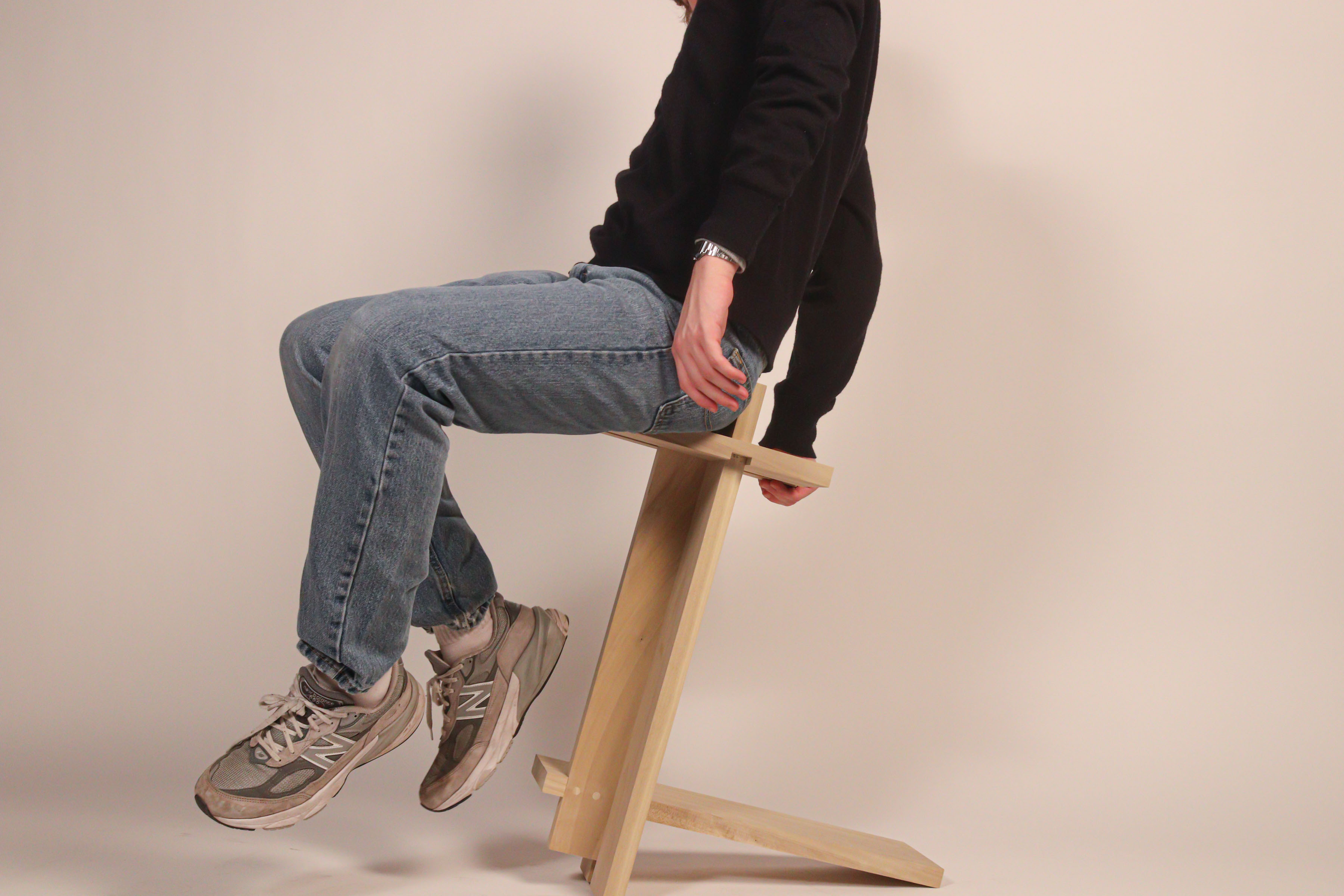
Four-Board Perching Stool

Fall 2025

Class project
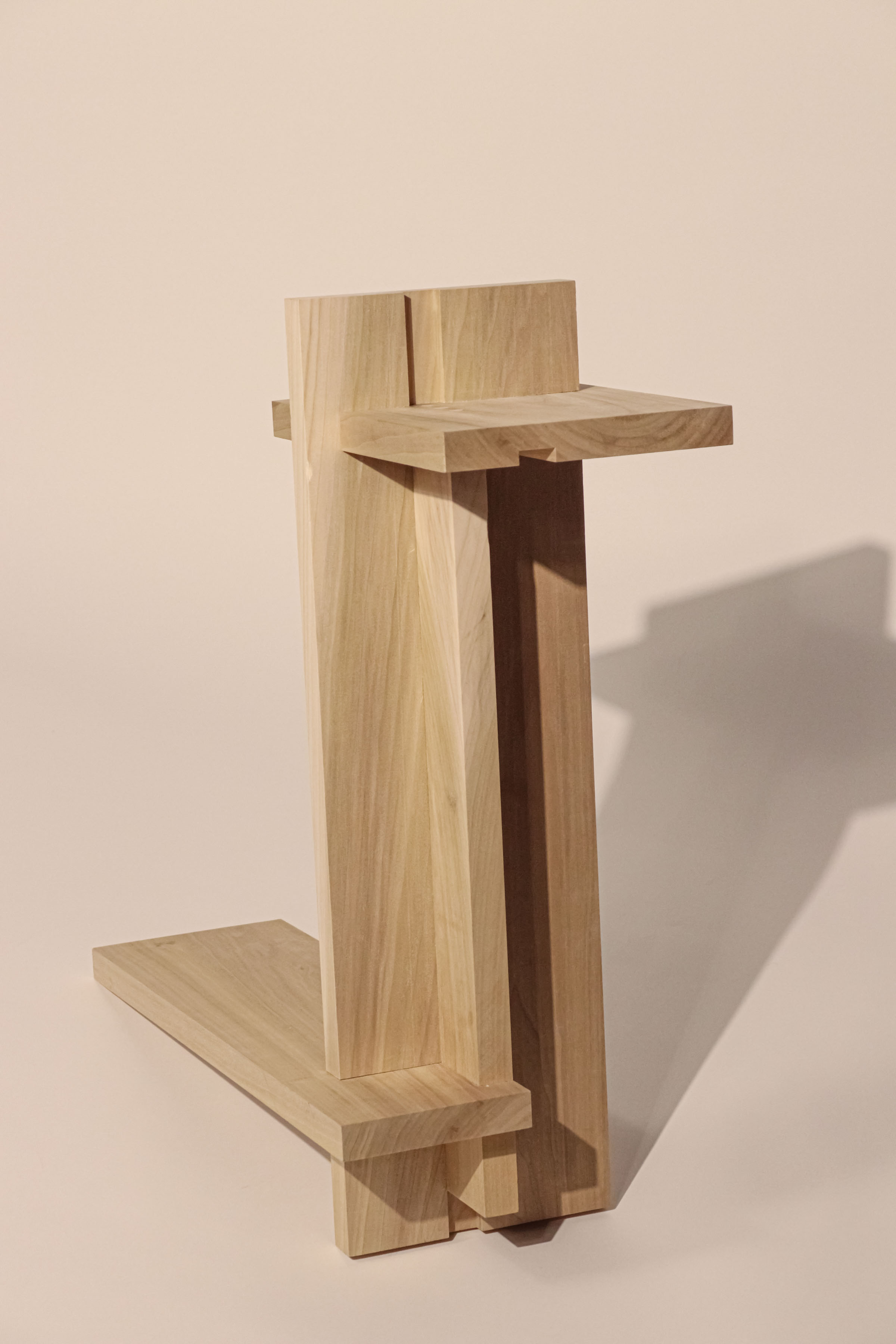
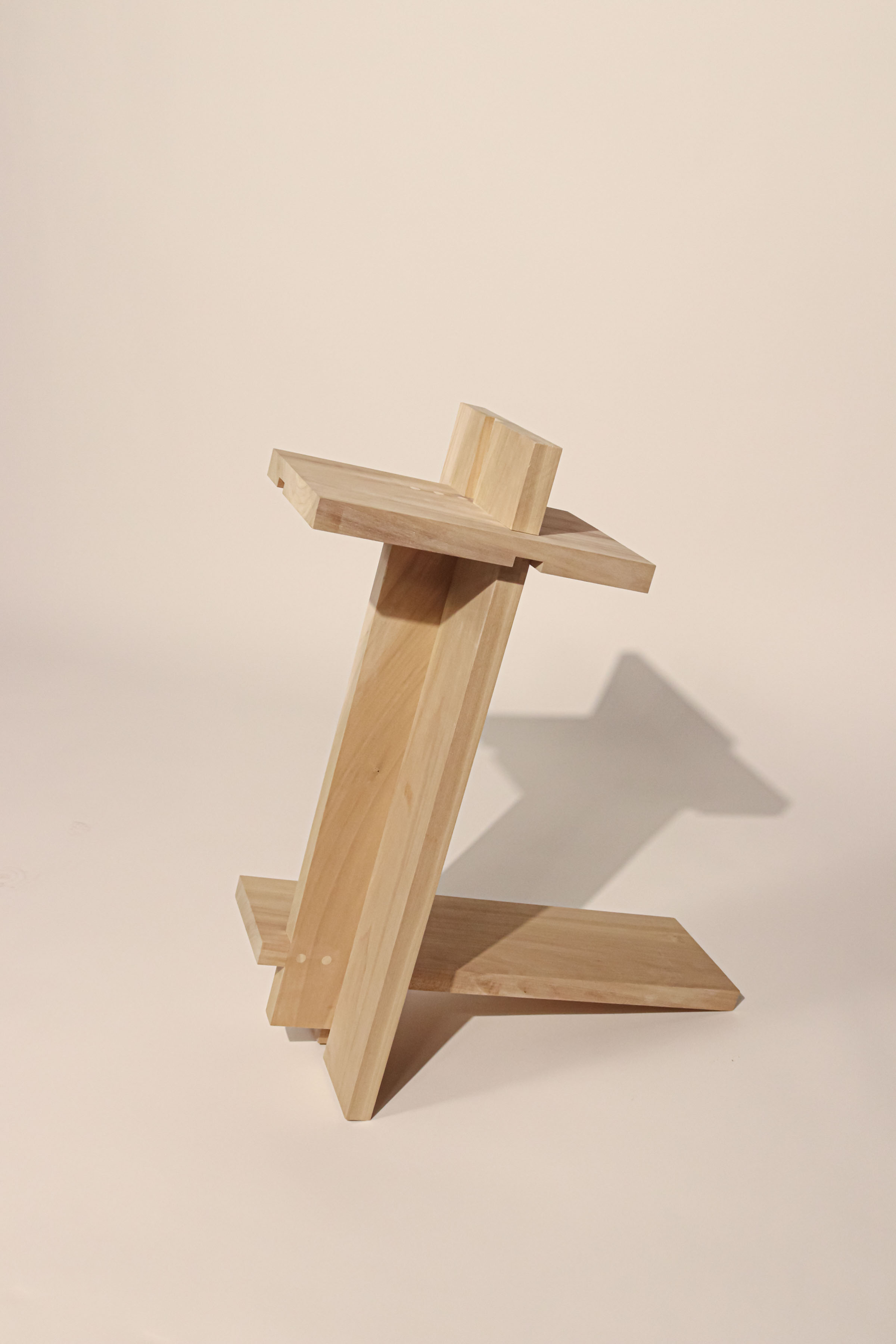
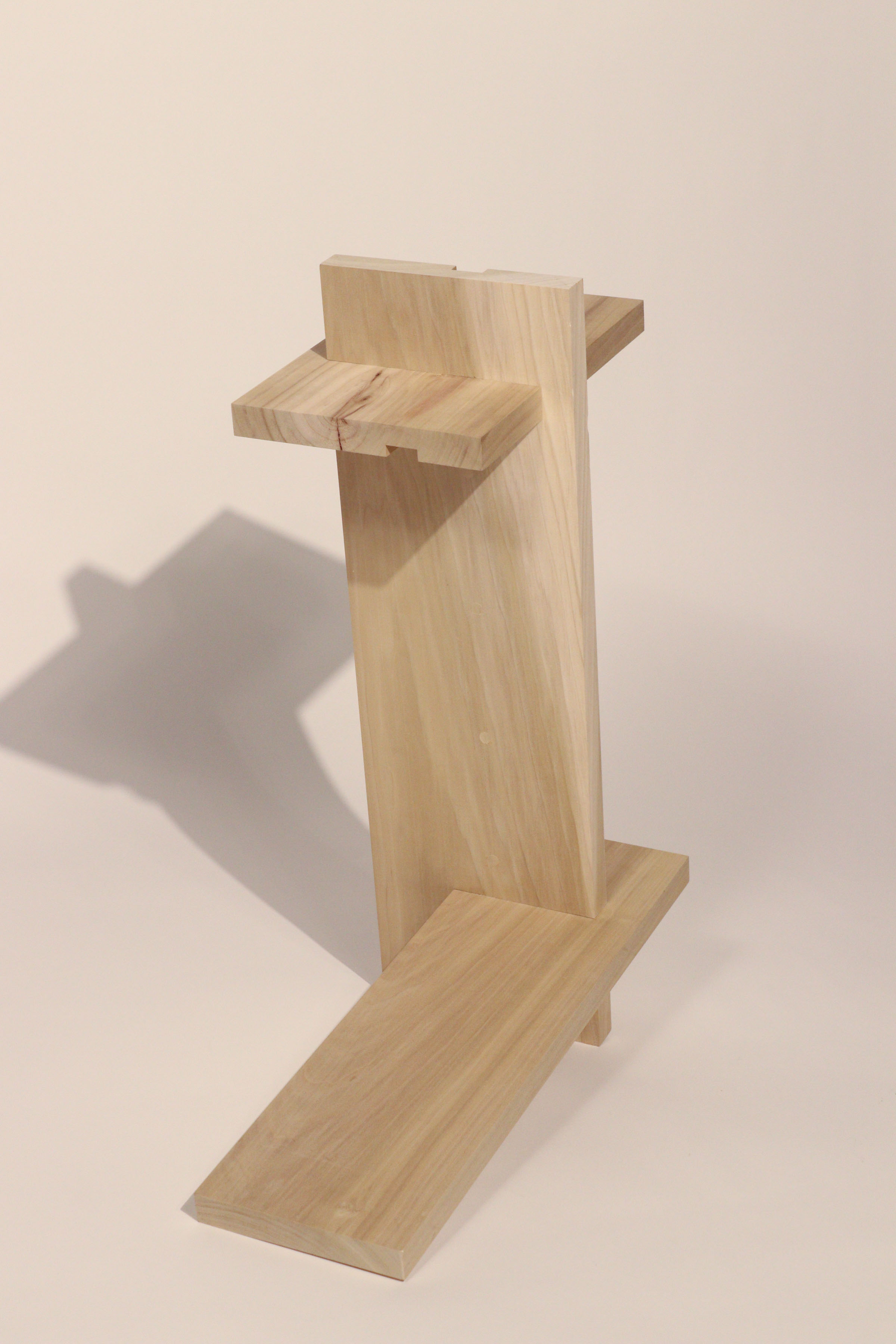
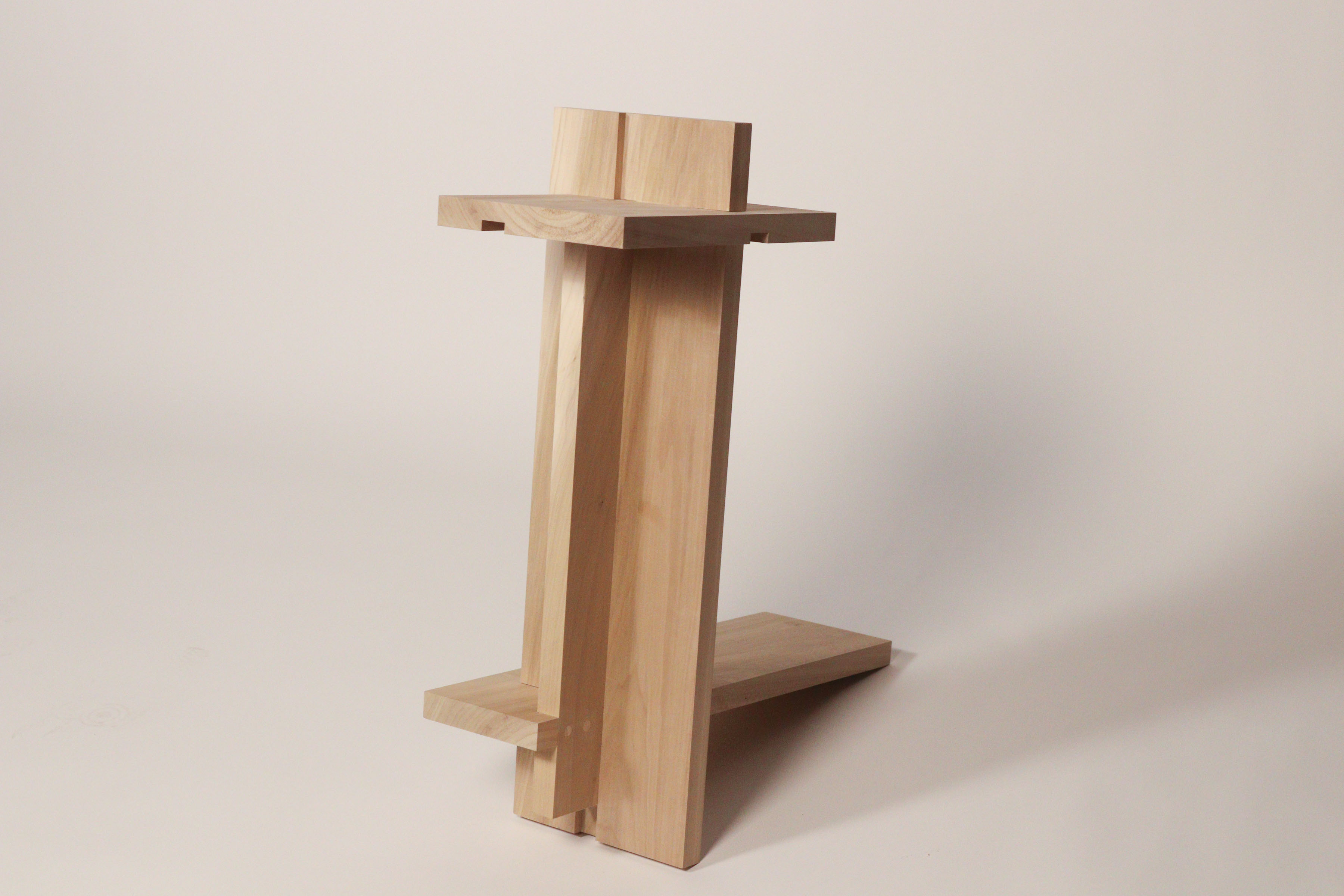
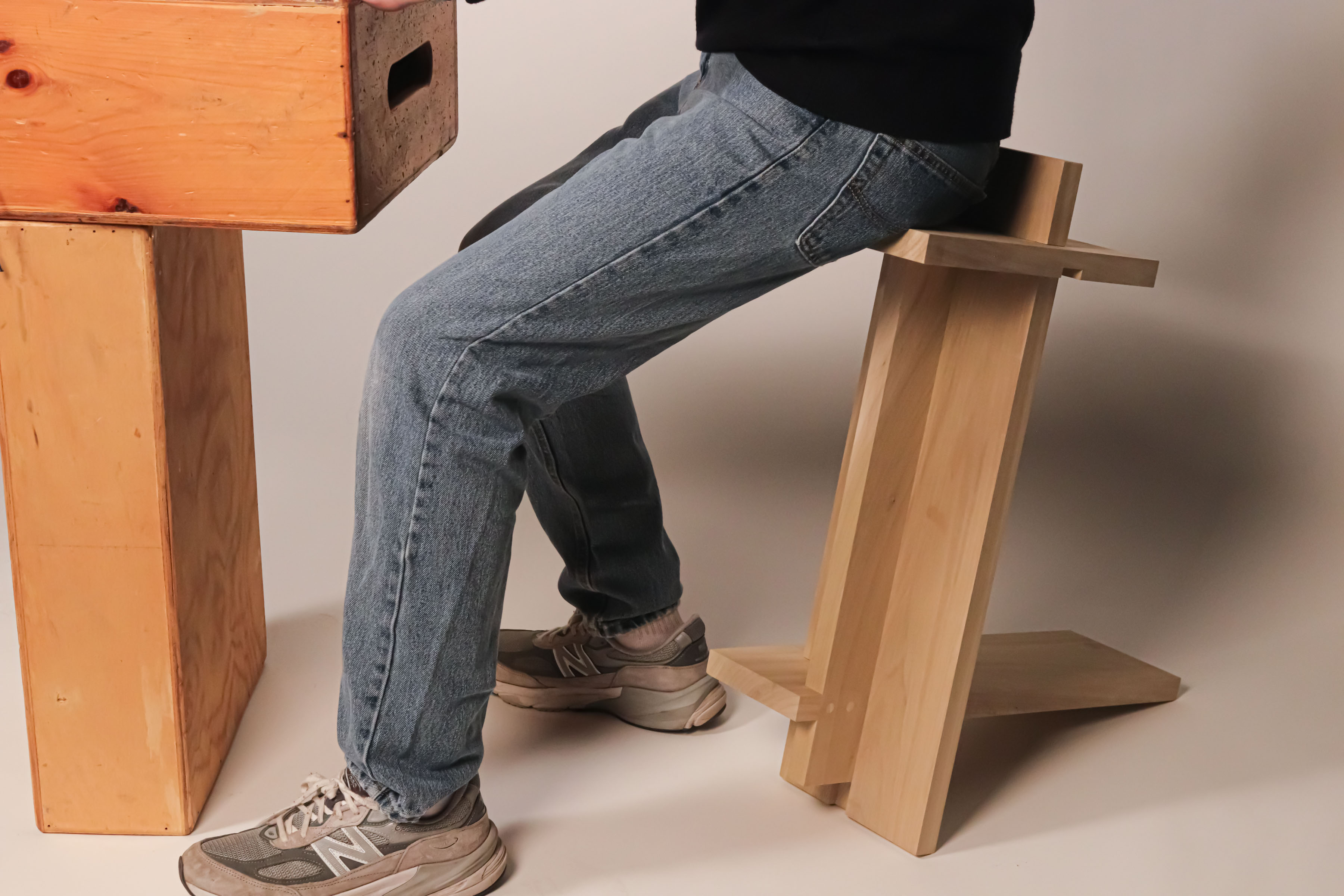
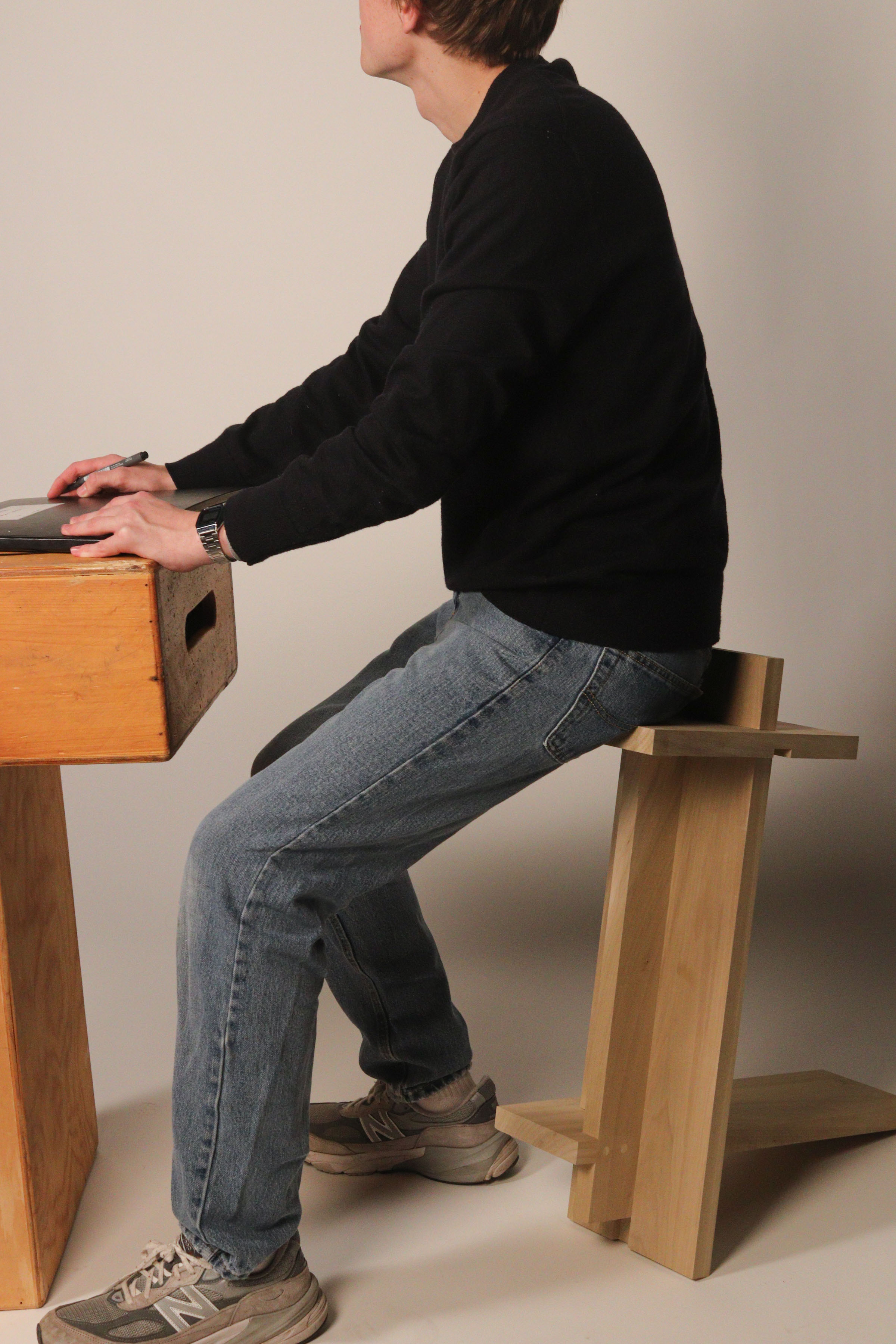
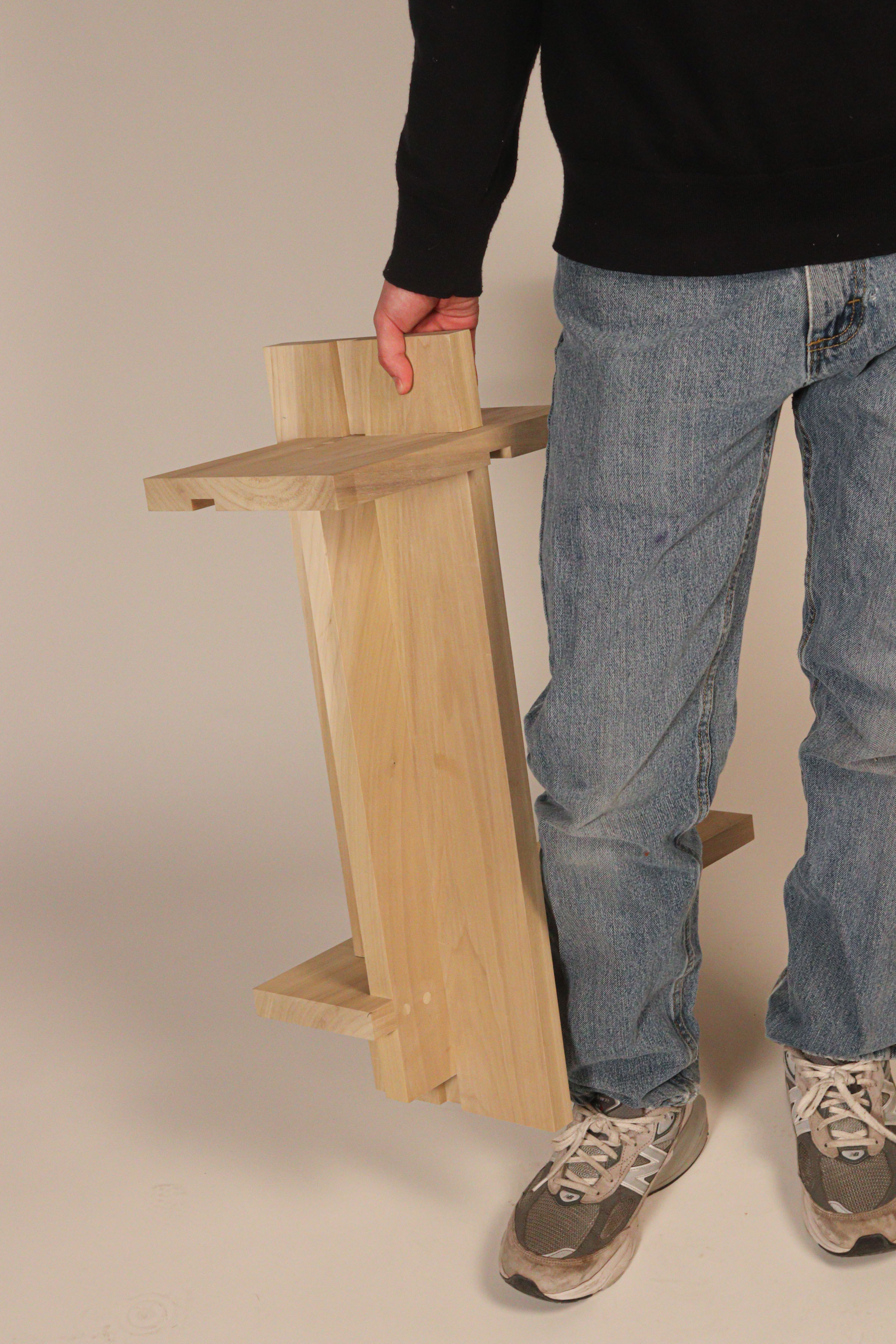
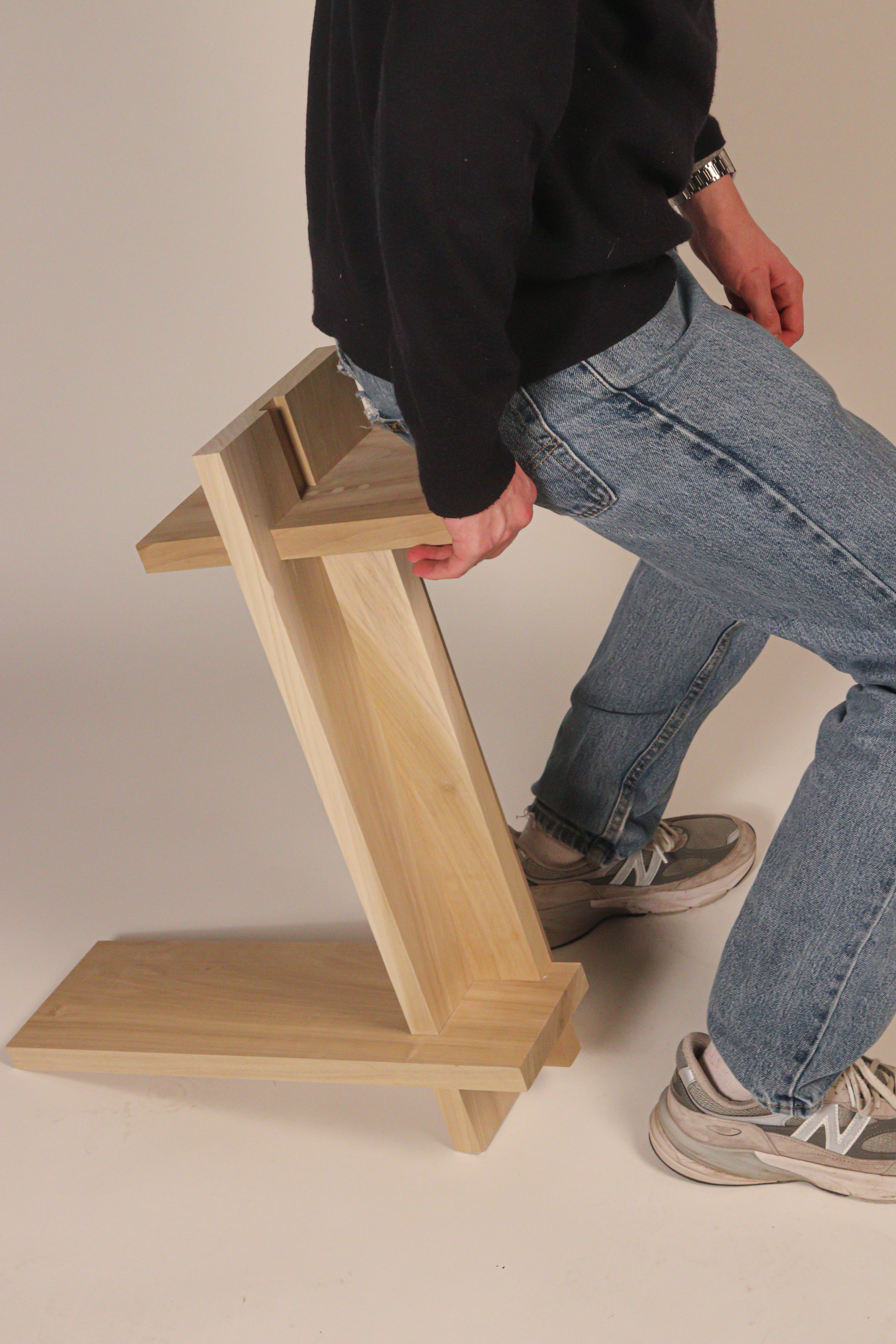
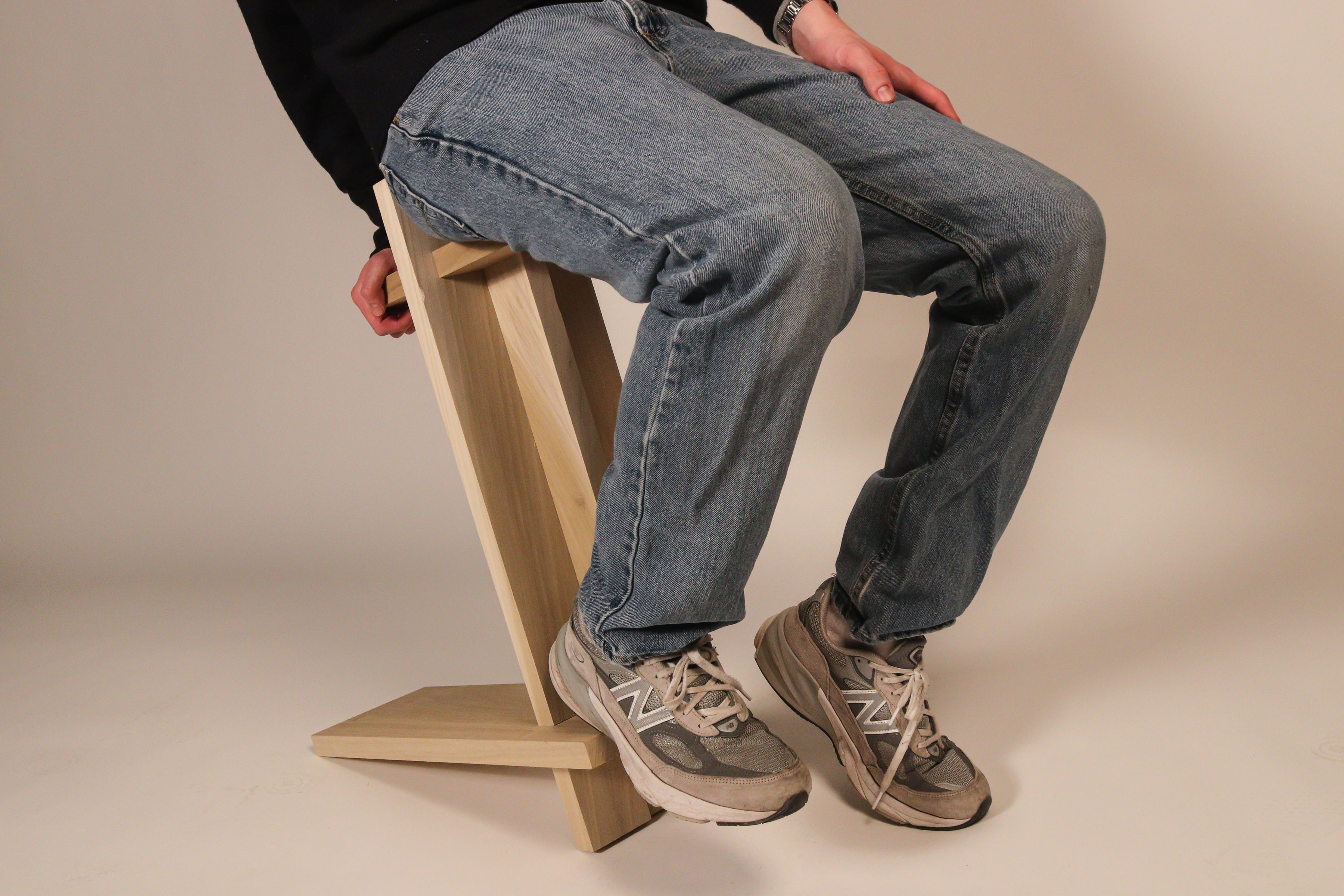
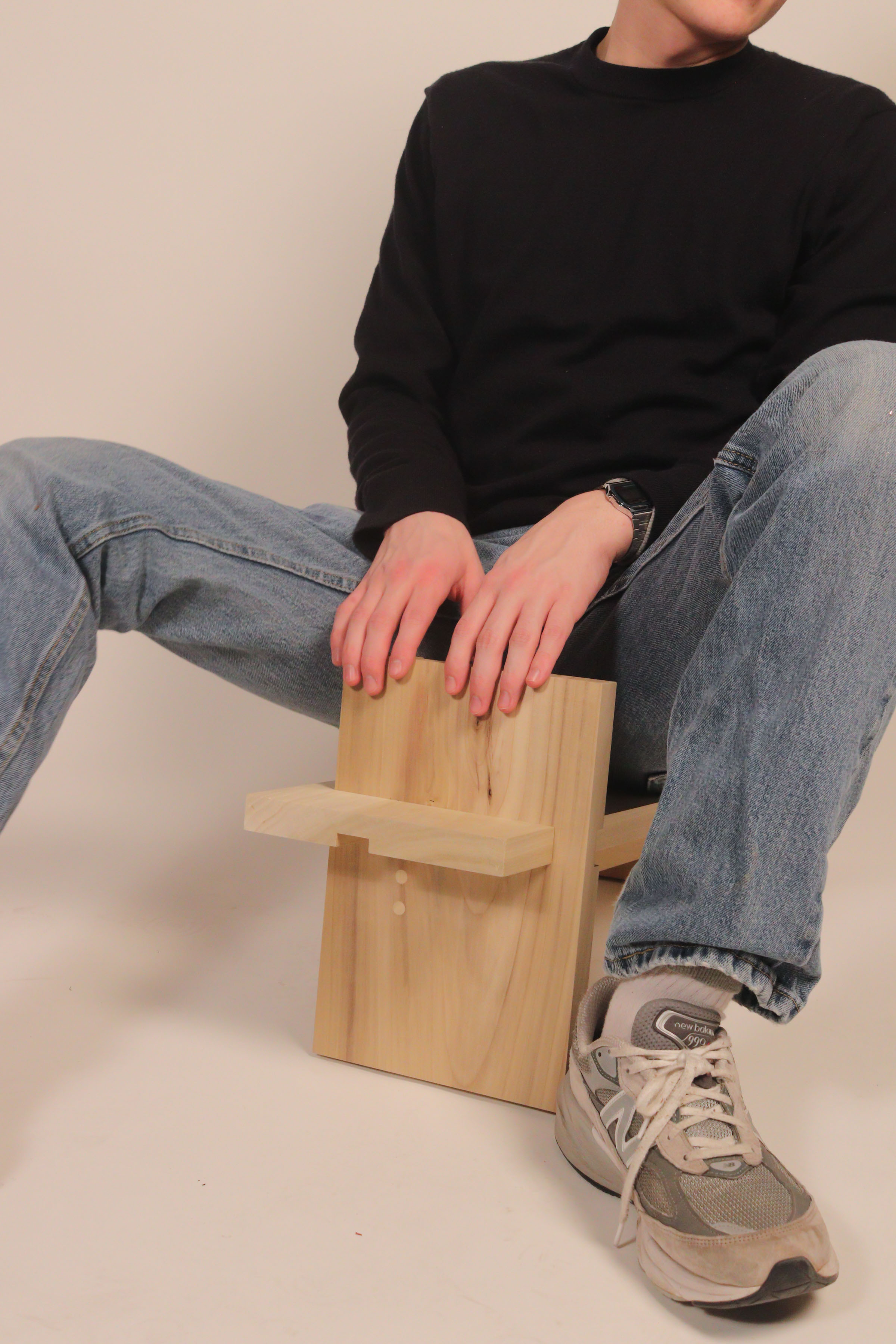
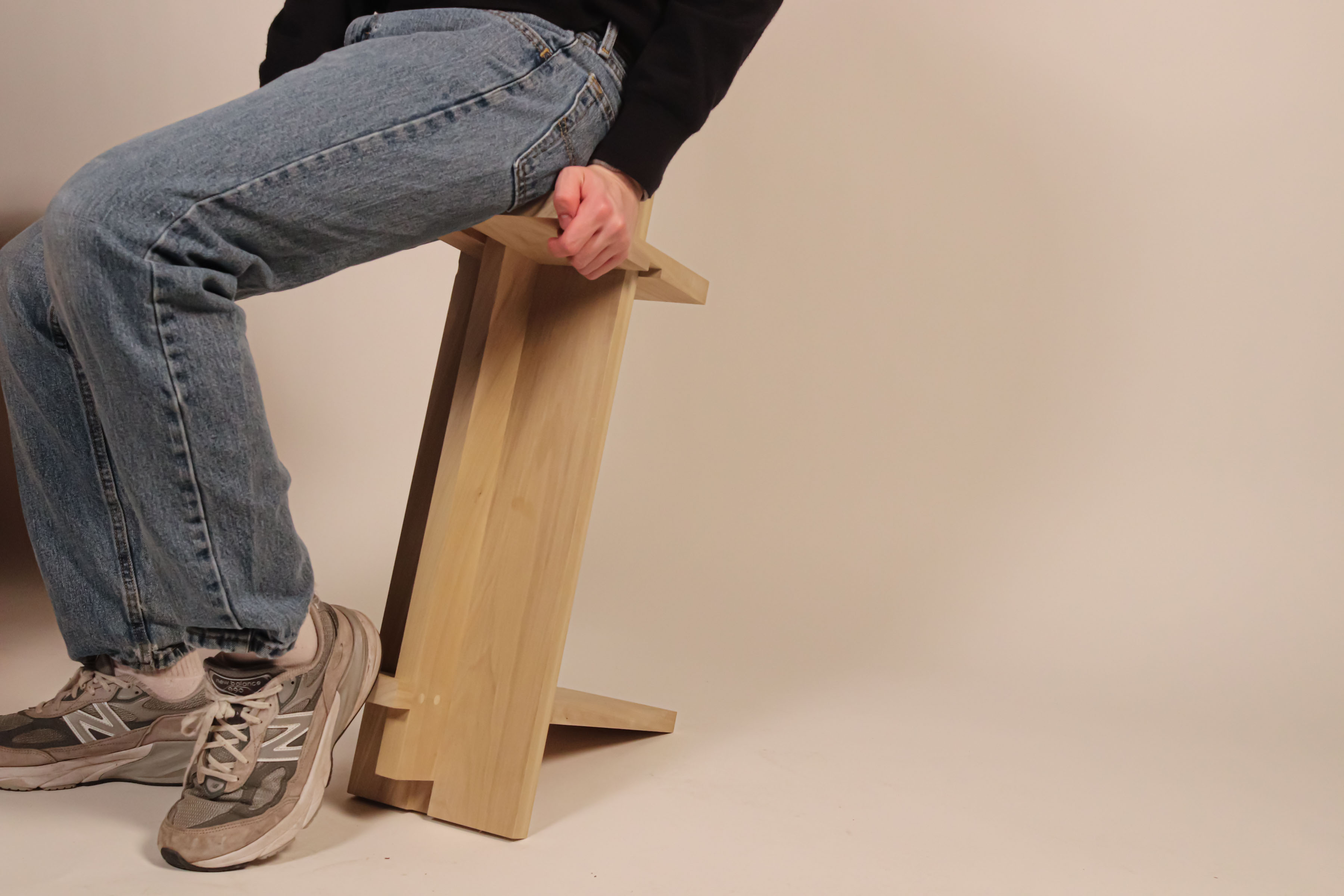
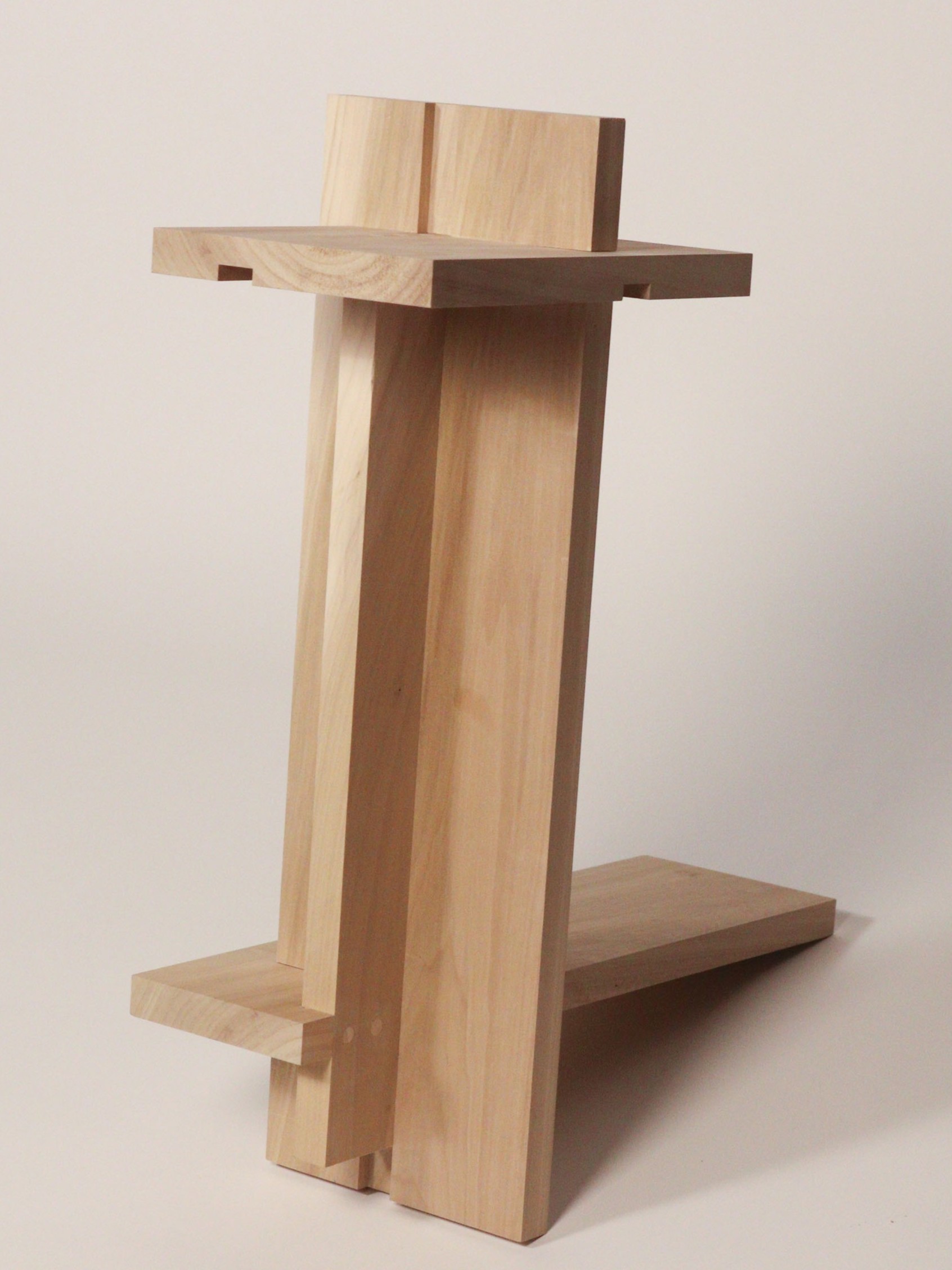
The goal of this project was to create a functional and visually appealing wooden stool while working within narrow constraints: the whole object is fabricated from a single 5’ board of poplar and fabricated only with saws and a router, each and every piece joined at right angles. The stool maintains strength and rigidity while reaching a height appropriate for a "perched" seat. Its form mirrors the active tension of the body position it supports. The fabrication of the stool was an exercise in precision and care, its plain integrity relying wholly on the accuracy of each and every cut, sanding and finishing kept to a bare minimum.
Process
Starting Ideas
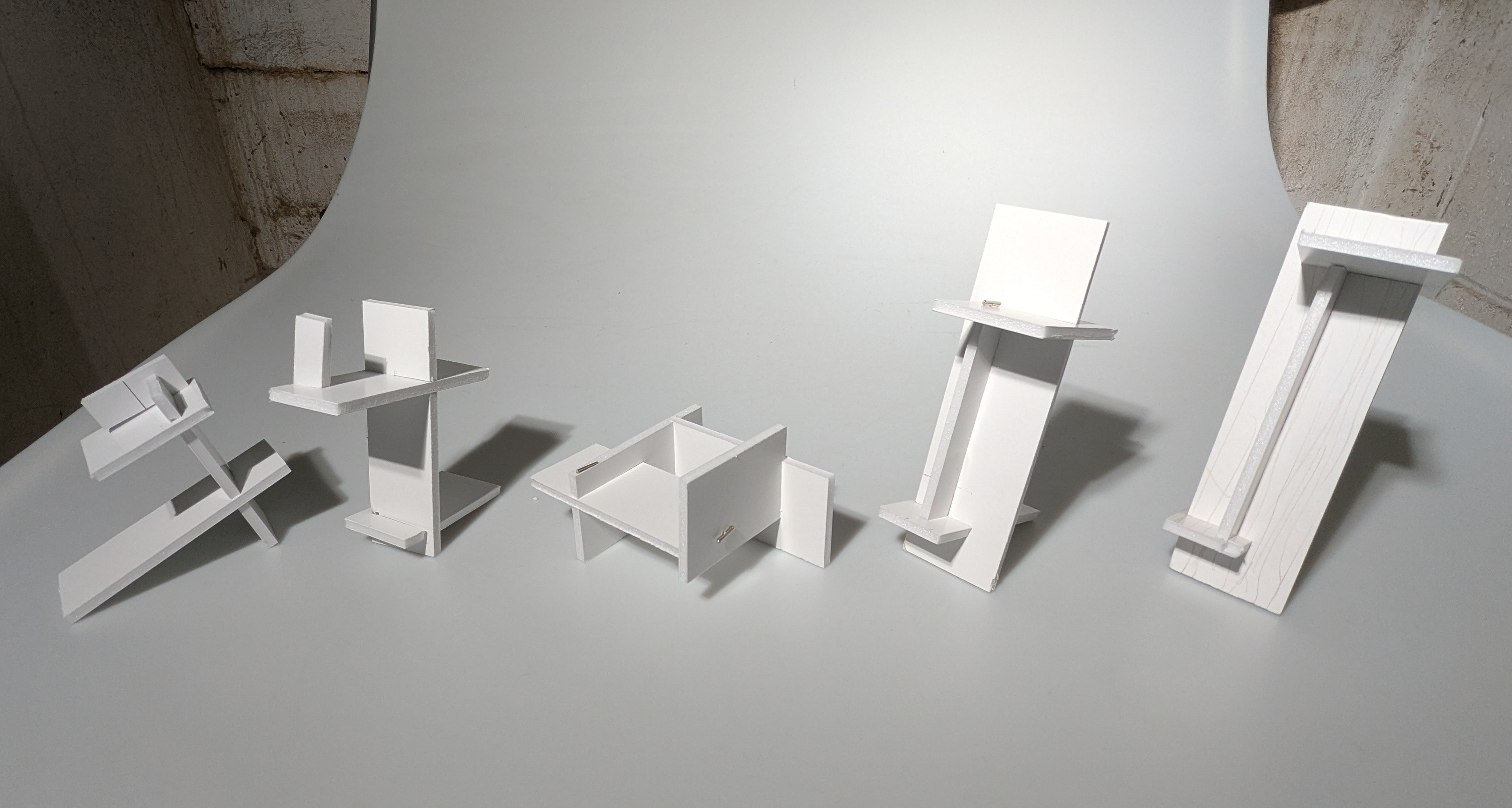
To begin ideation, a series of quarter scale foamcore models were made. I aimed to design a stool which supports a high "perching" position which actively engages the body. Following this ultimate goal, I wanted to maximize height using the 5-foot board, so I made sure my starting piece of foam was to scale to properly predict the height of the stool. I worked expansively at first to cover a range of ideas, narrowing down with each version. The small models help predict overall structural stability and are a good medium to assess the visual tension of the object.
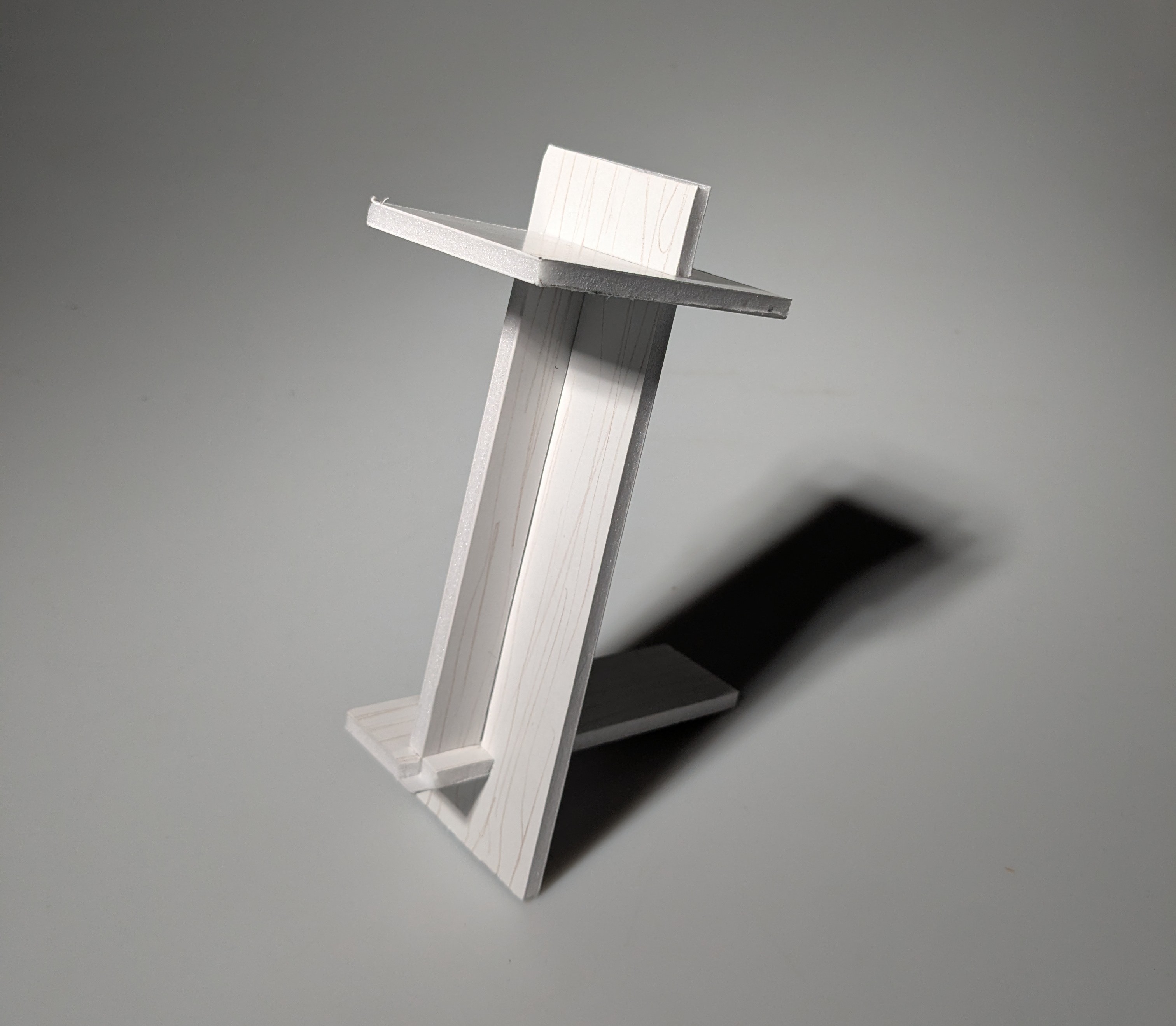
I decided on a general design which used a long back board to create a good height. To conserve material, I split one full-width board into two: one to act as a foot to maintain a shallow tilt, and the other a rib to tie the foot to the seat and maintain rigidity.


Iteration
Once the design direction was chosen, a full-scale cardboard model was made to test integrity and proportion. Creating the full-scale model helped reveal some structural weaknesses in the initial design which were not fully evident in the quarter-scale models. Most pressing was potential for seperation between the rib and the long foot piece, which could come apart even with hardware; the goal was to have a stool stable under load even without hardware, the hardware only secondarliy securing the parts together.
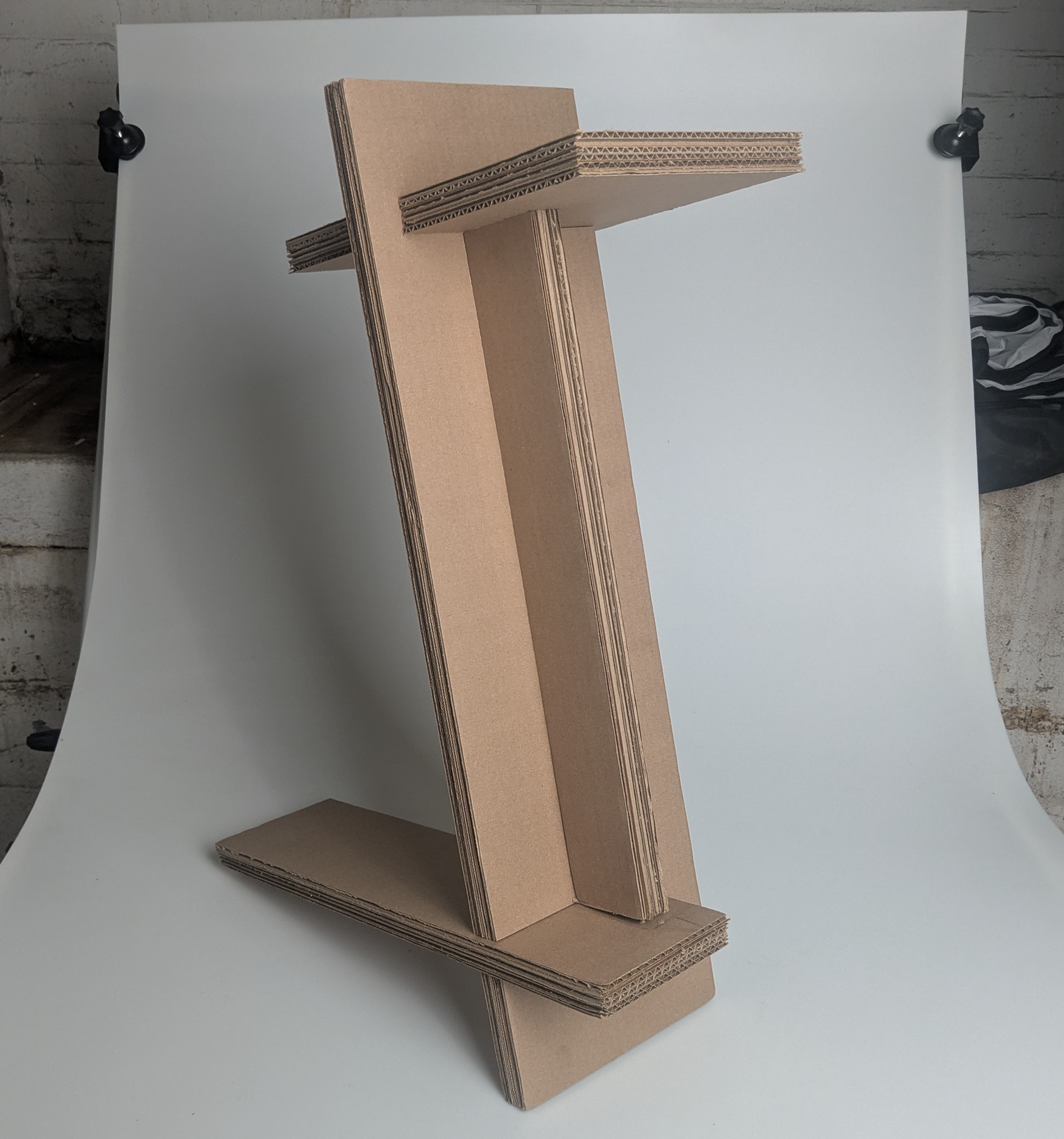
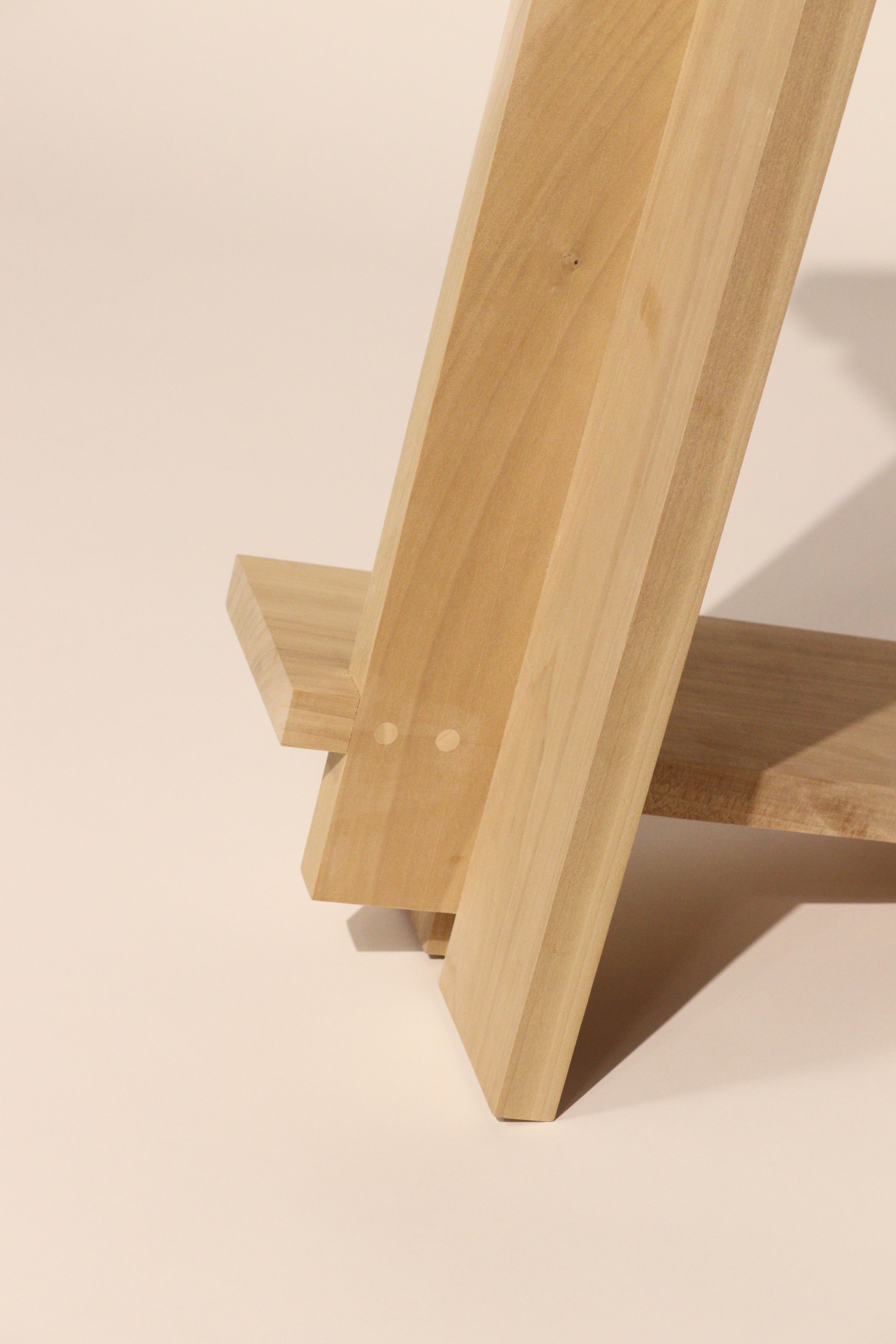
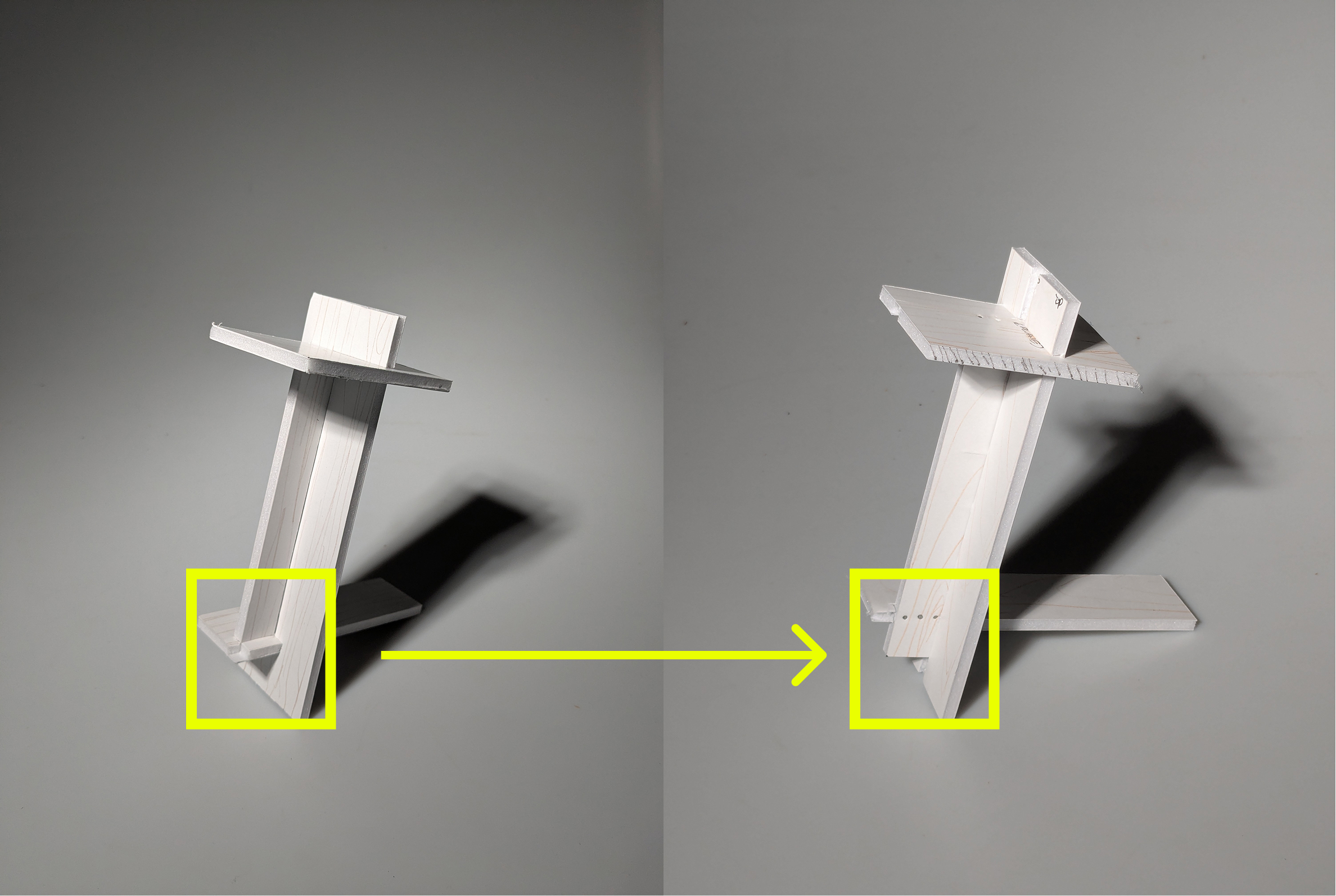
Following testing, the rib piece was adjusted to run through the foot piece to increase structural integrity. This way, the rib had more contant surface with the foot piece, in multiuple planes. Also, the hardware would run perpendicualr to the force instead of parrallel, reducing the potenial for the threads ripping out. This new configuration also allowed for slight allowance in the length of the rib as it no longer had to sit flush to the foot.
Fabrication
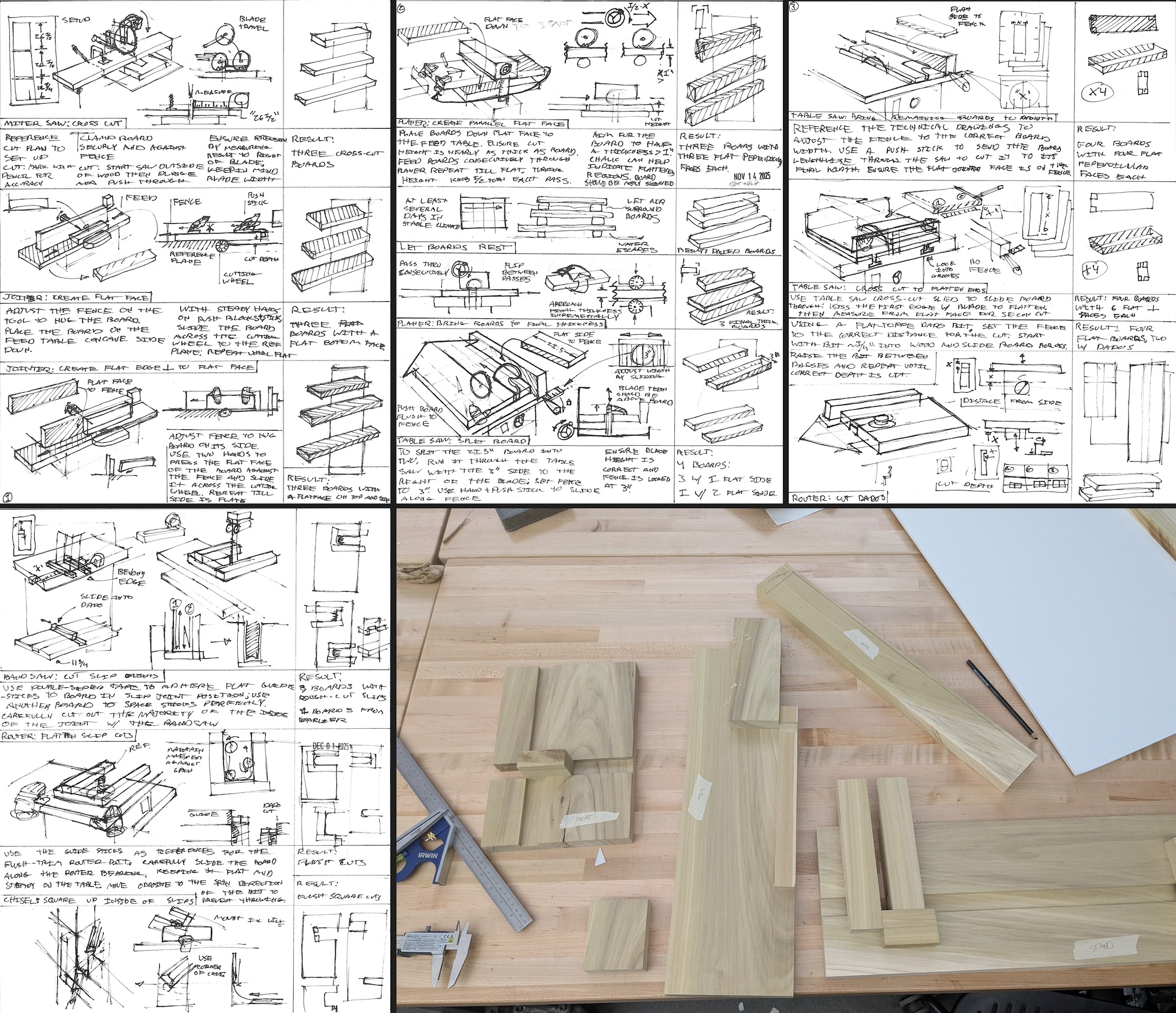
Before moving to fabrication, shop drawings were made to plan out each step in the process. They describe how each tool is used and act as an instruction manual specific to the object being made. This planning step demonstrates to those in charge of the shop that a thought-through plan exists to craft the stool before a tool is used. This approach helps avoid mistakes and safety mishaps while maintaining precision.
Technical Drawing
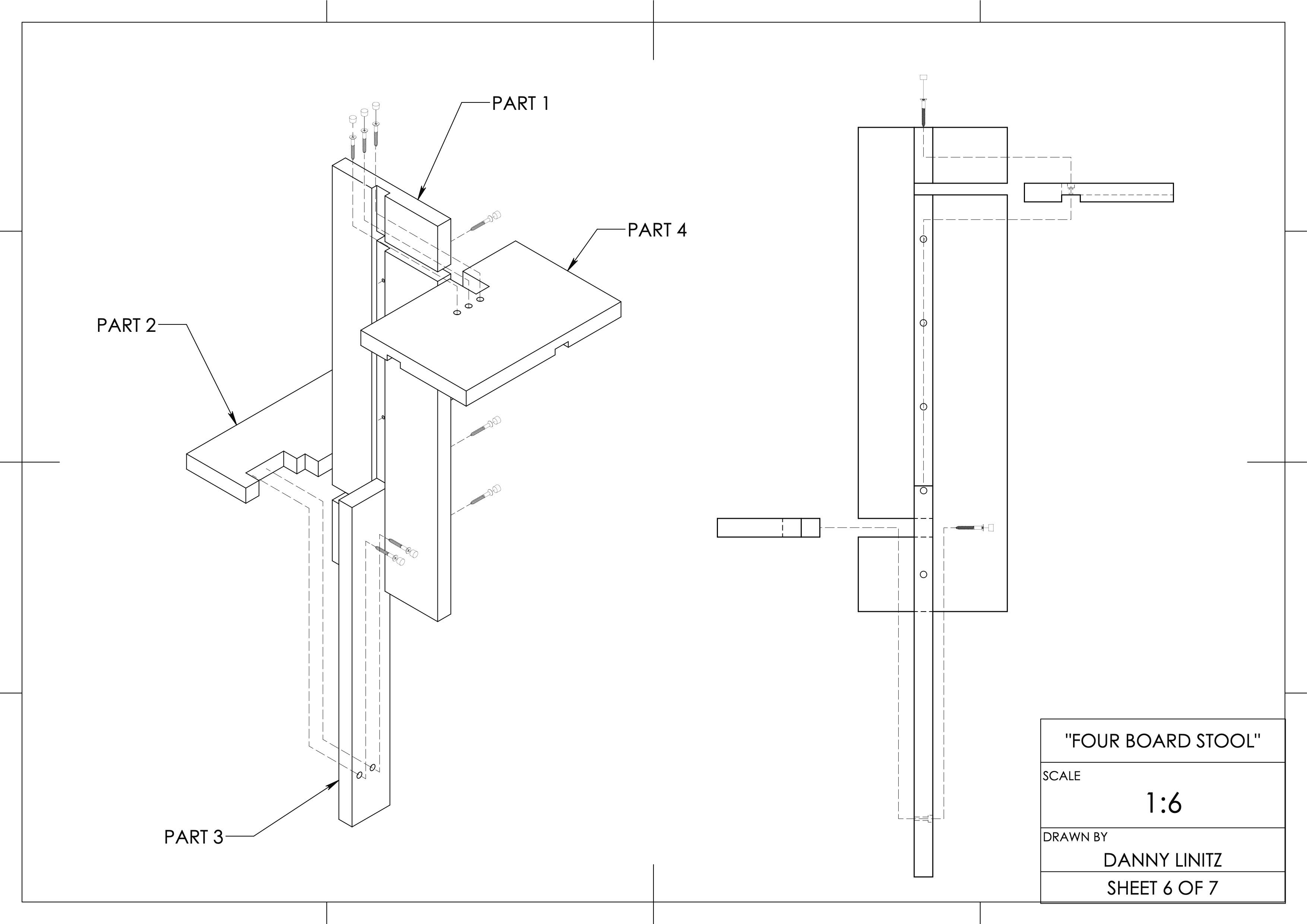
Once the design was finalized, technical drawings were drafted in Solidworks to solidify the specifications of the stool. The technical packet and the shop drawings were referenced during the fabrication of the final stool to maintain high precision and efficeincy.
Gallery