Flowform Spatula

Fall 2025

Class Project
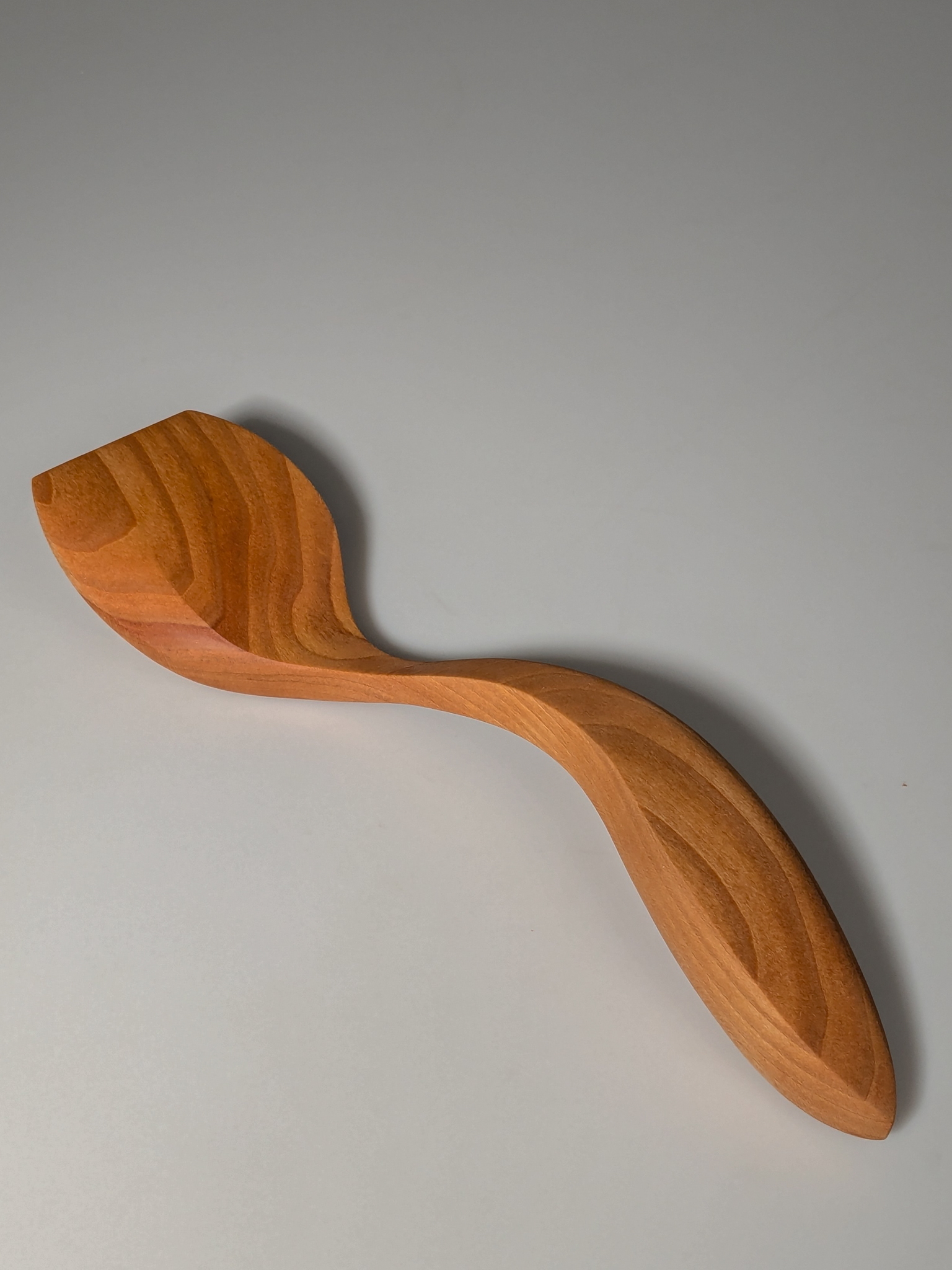
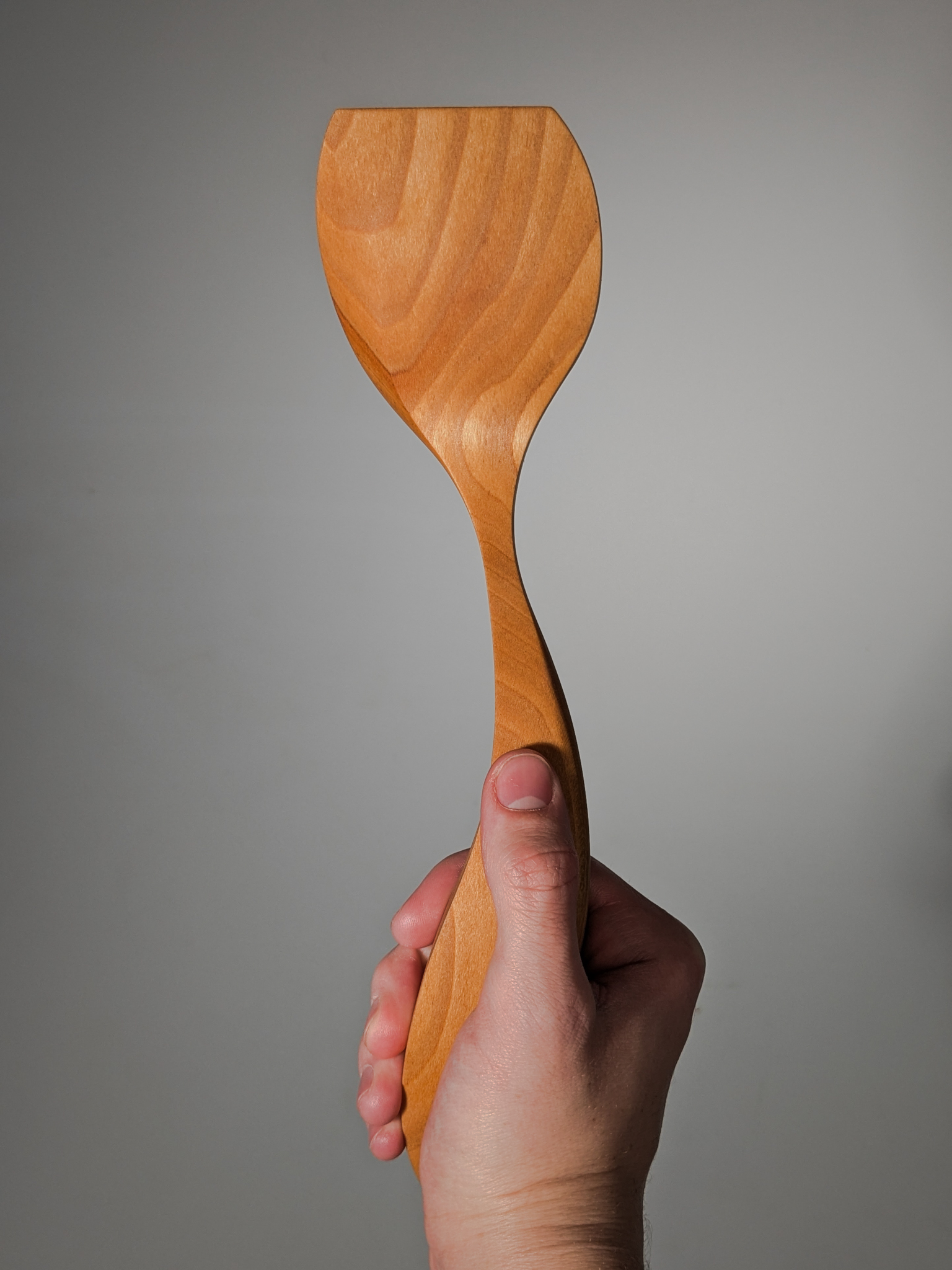
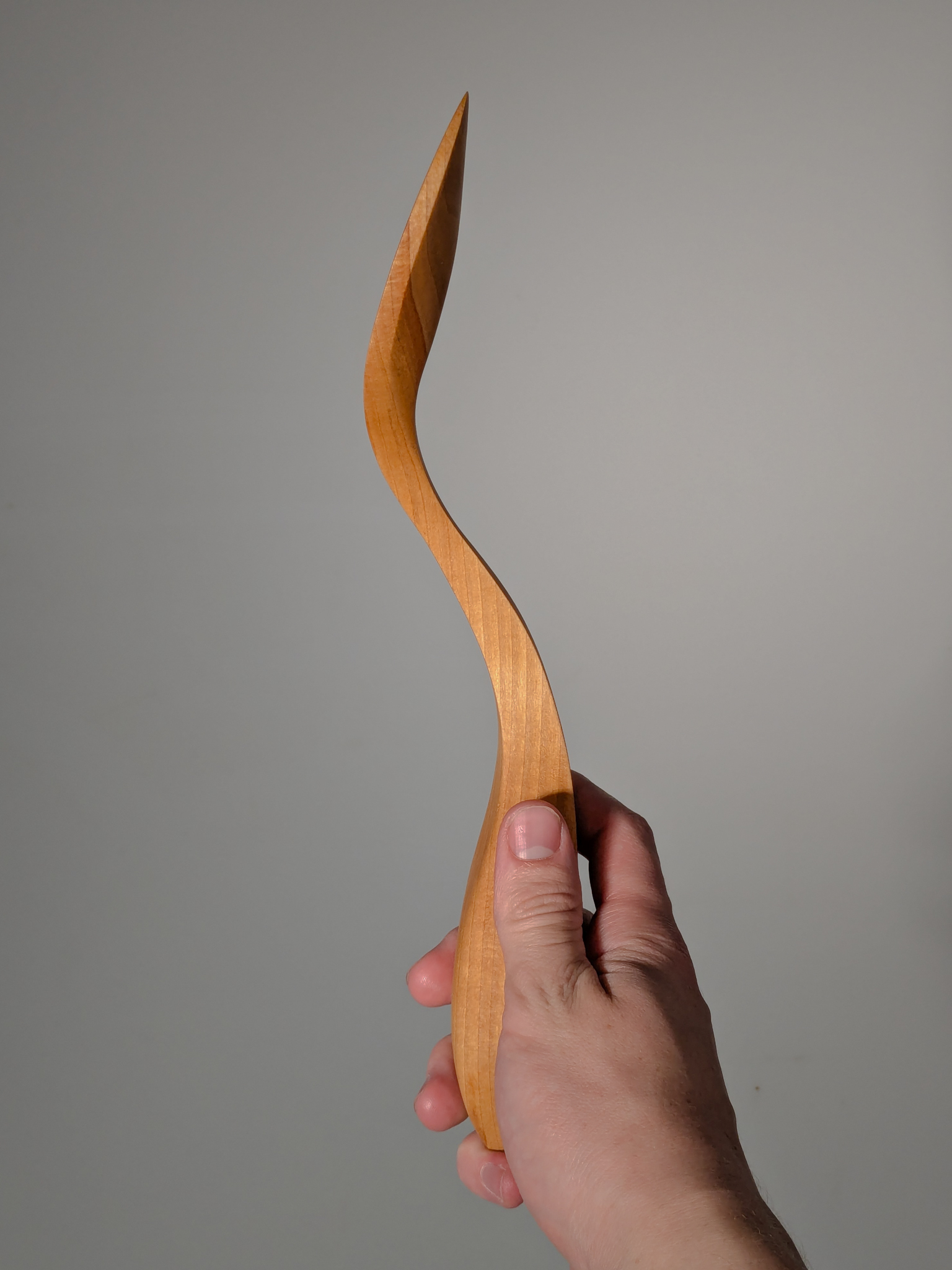
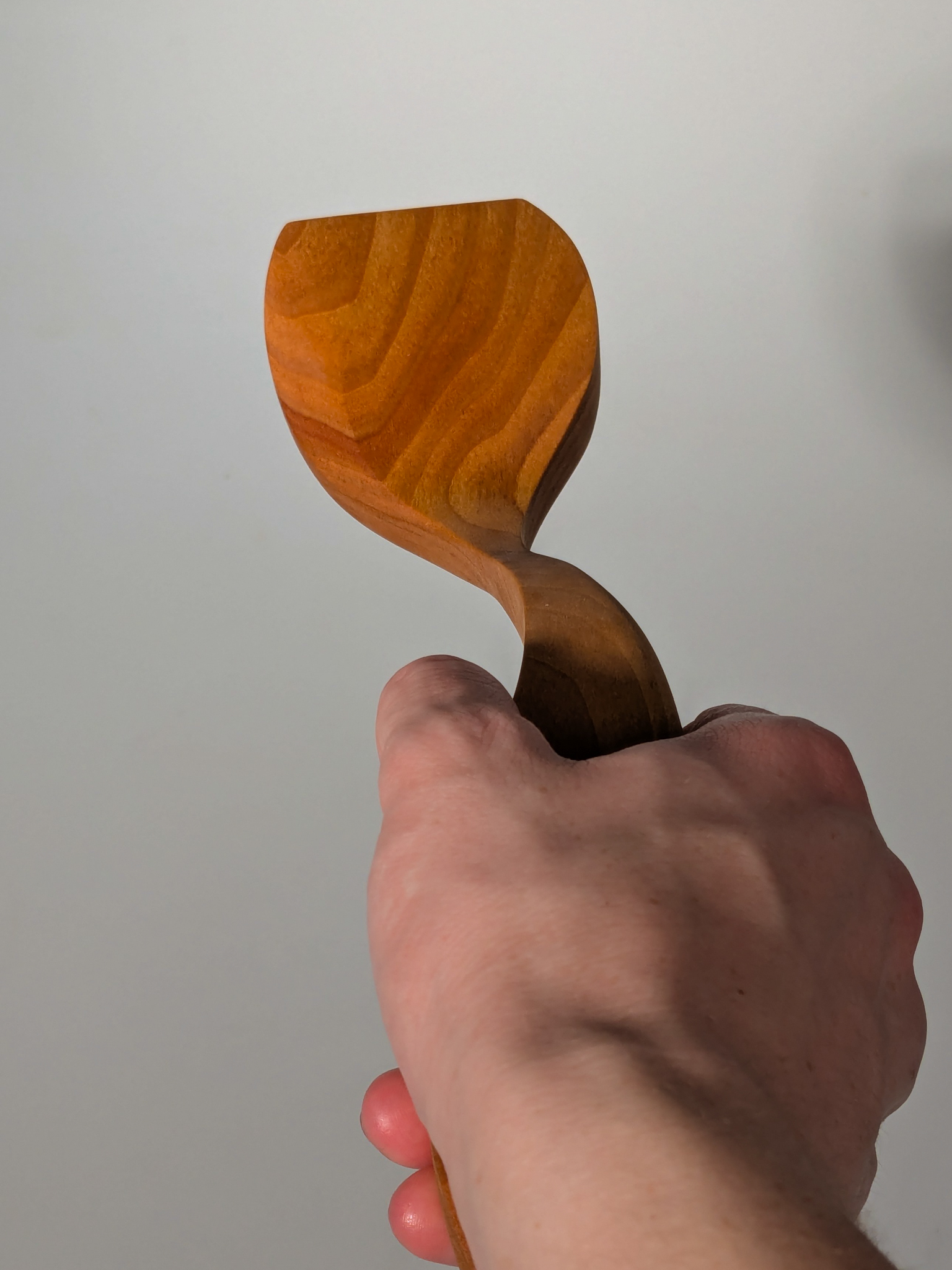
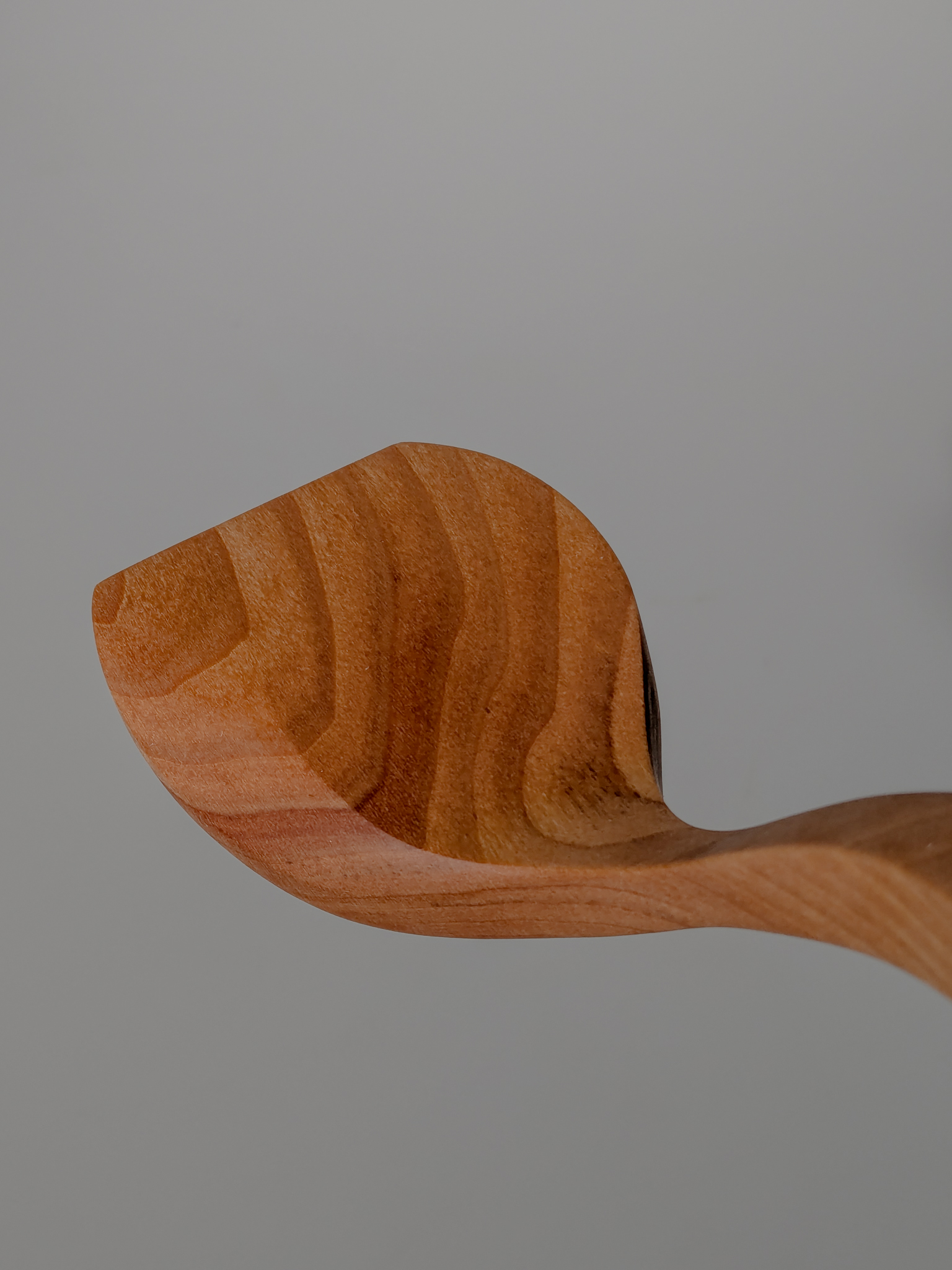
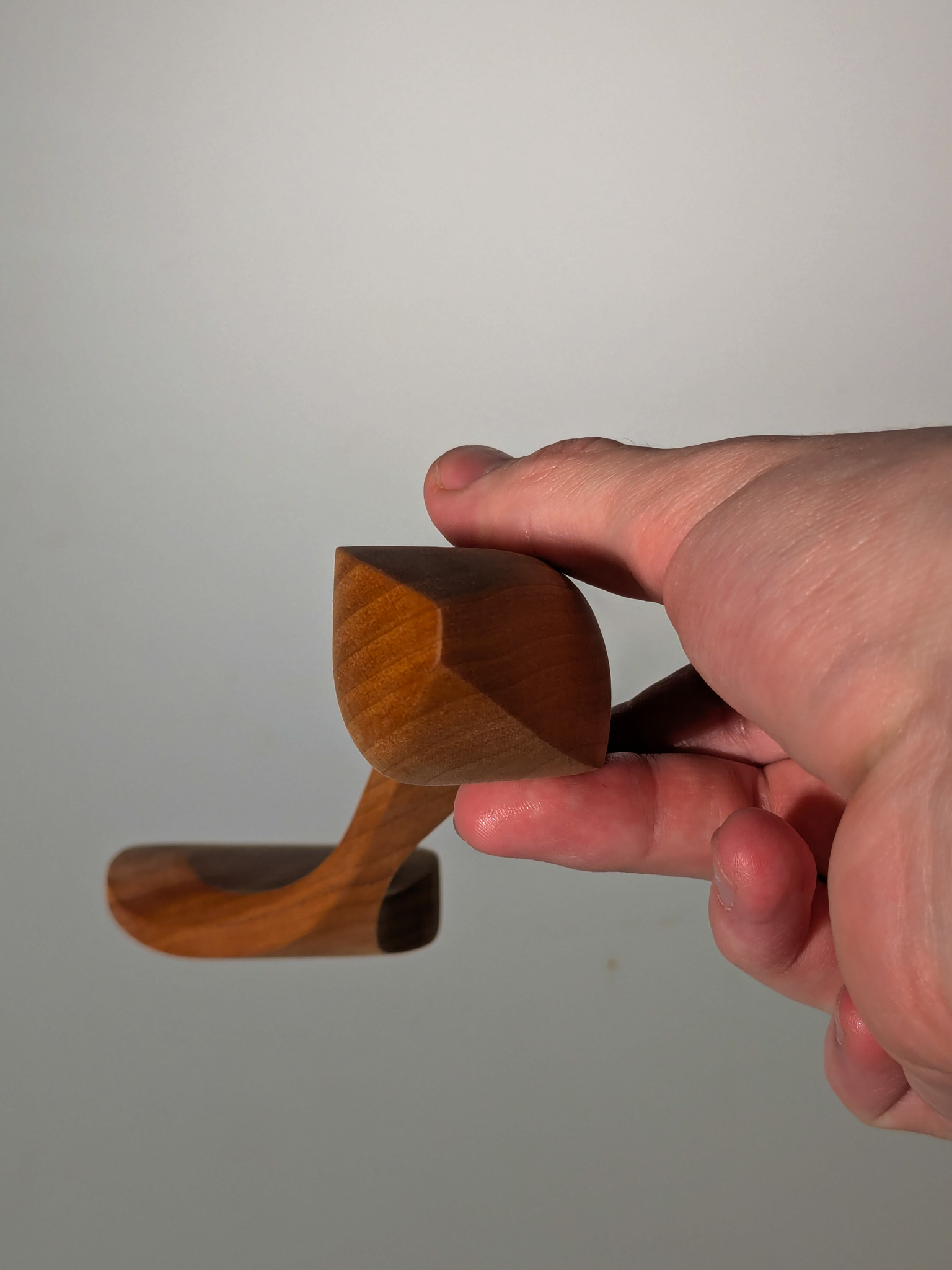
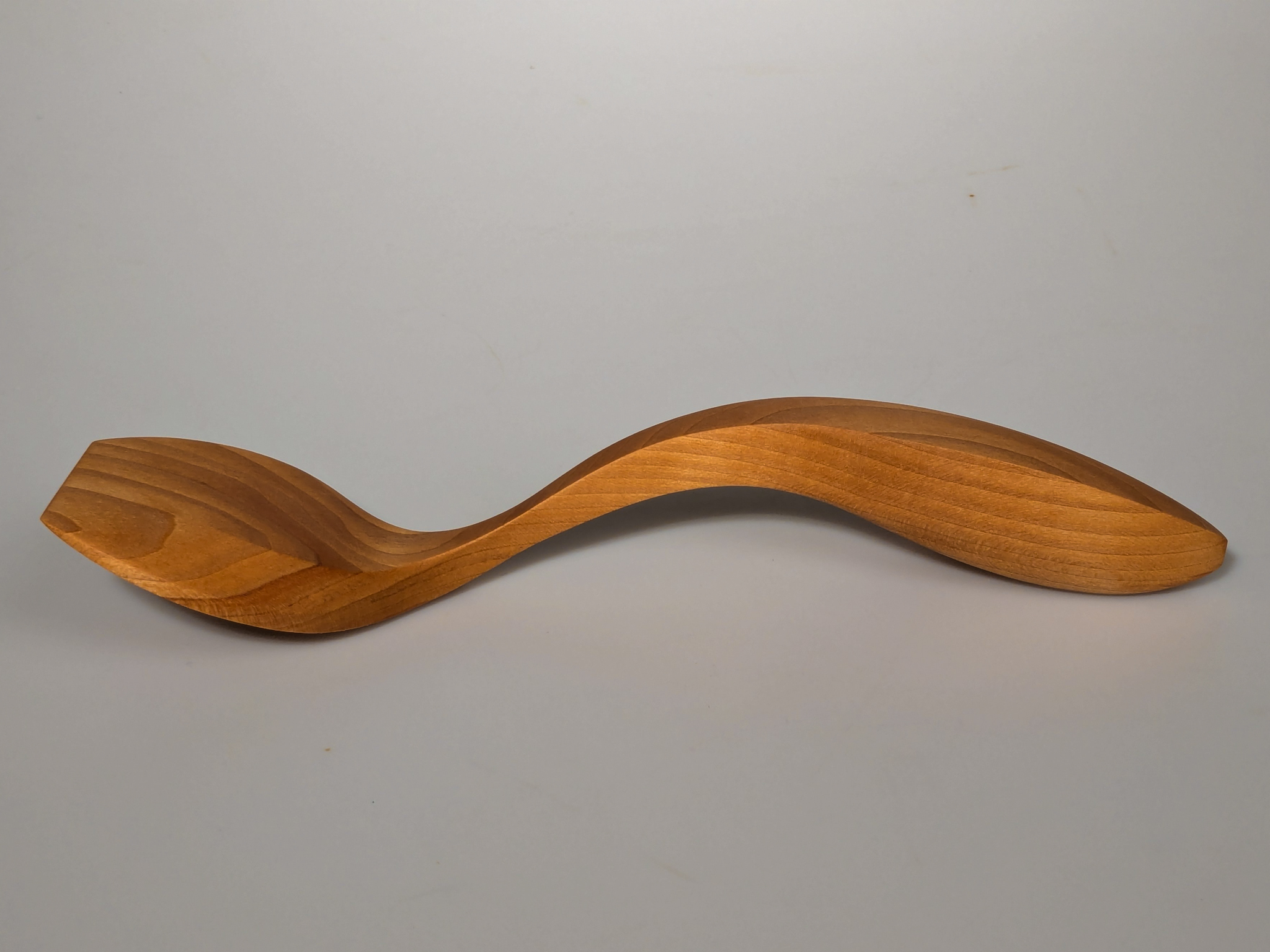
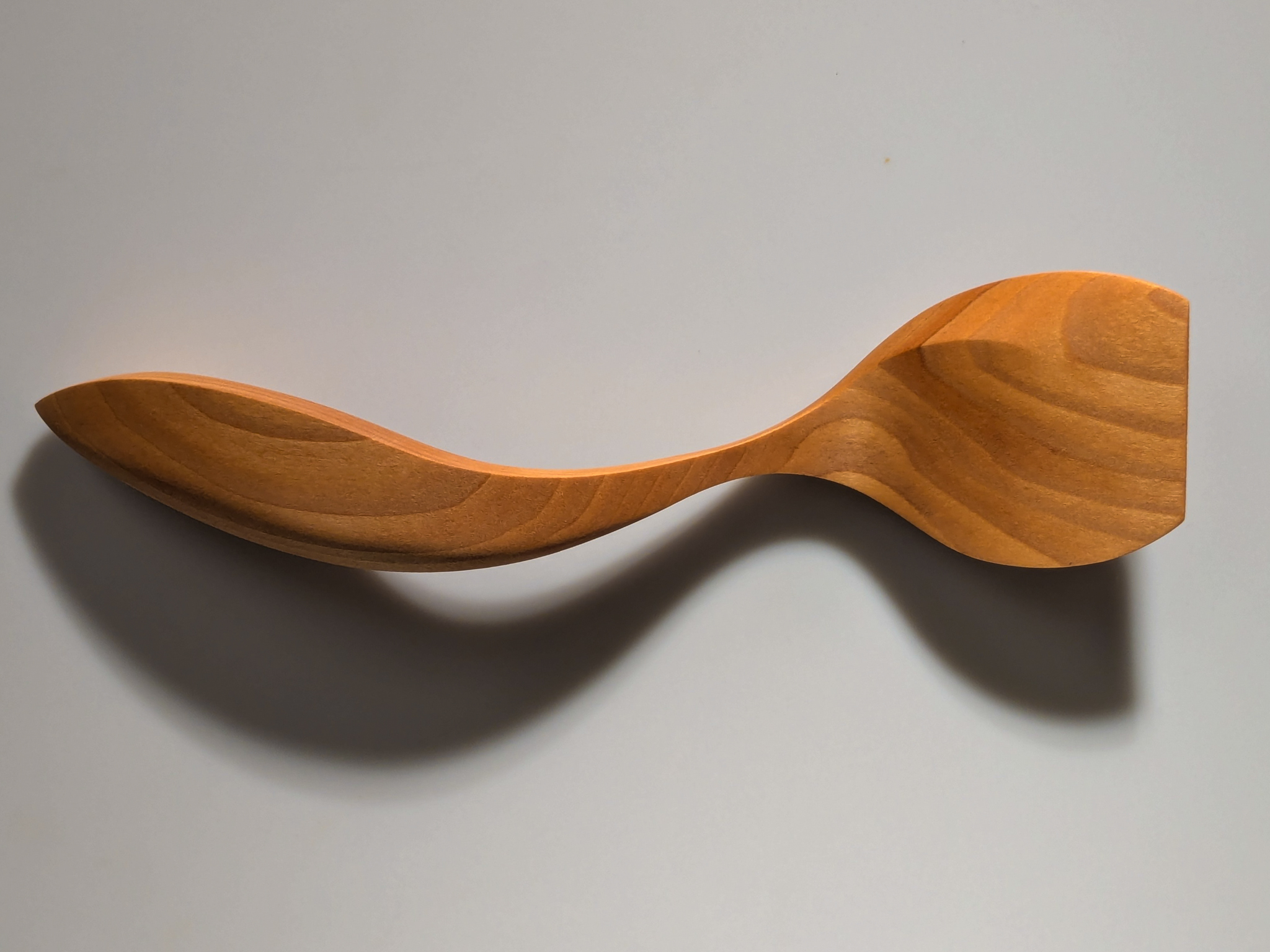
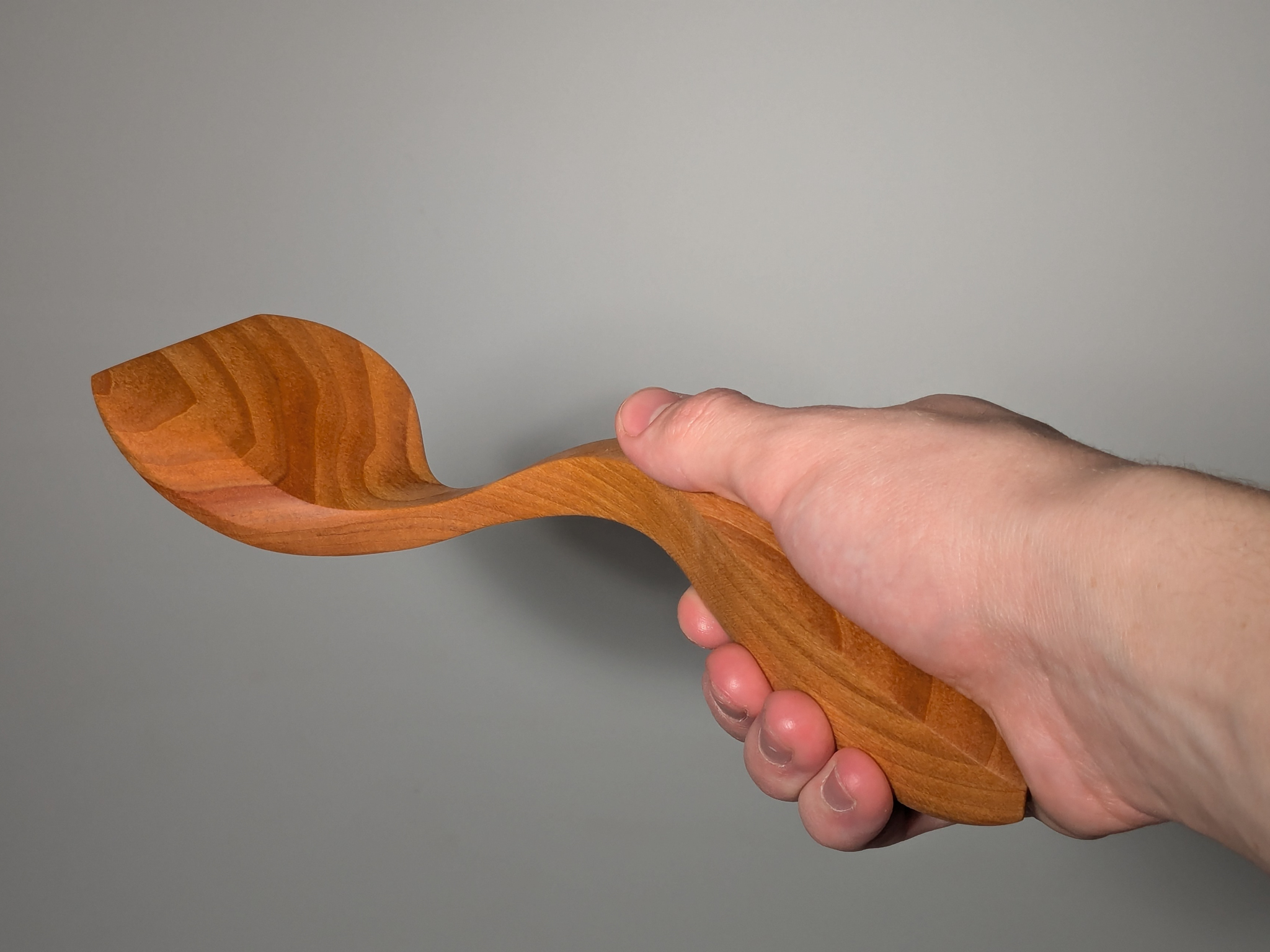
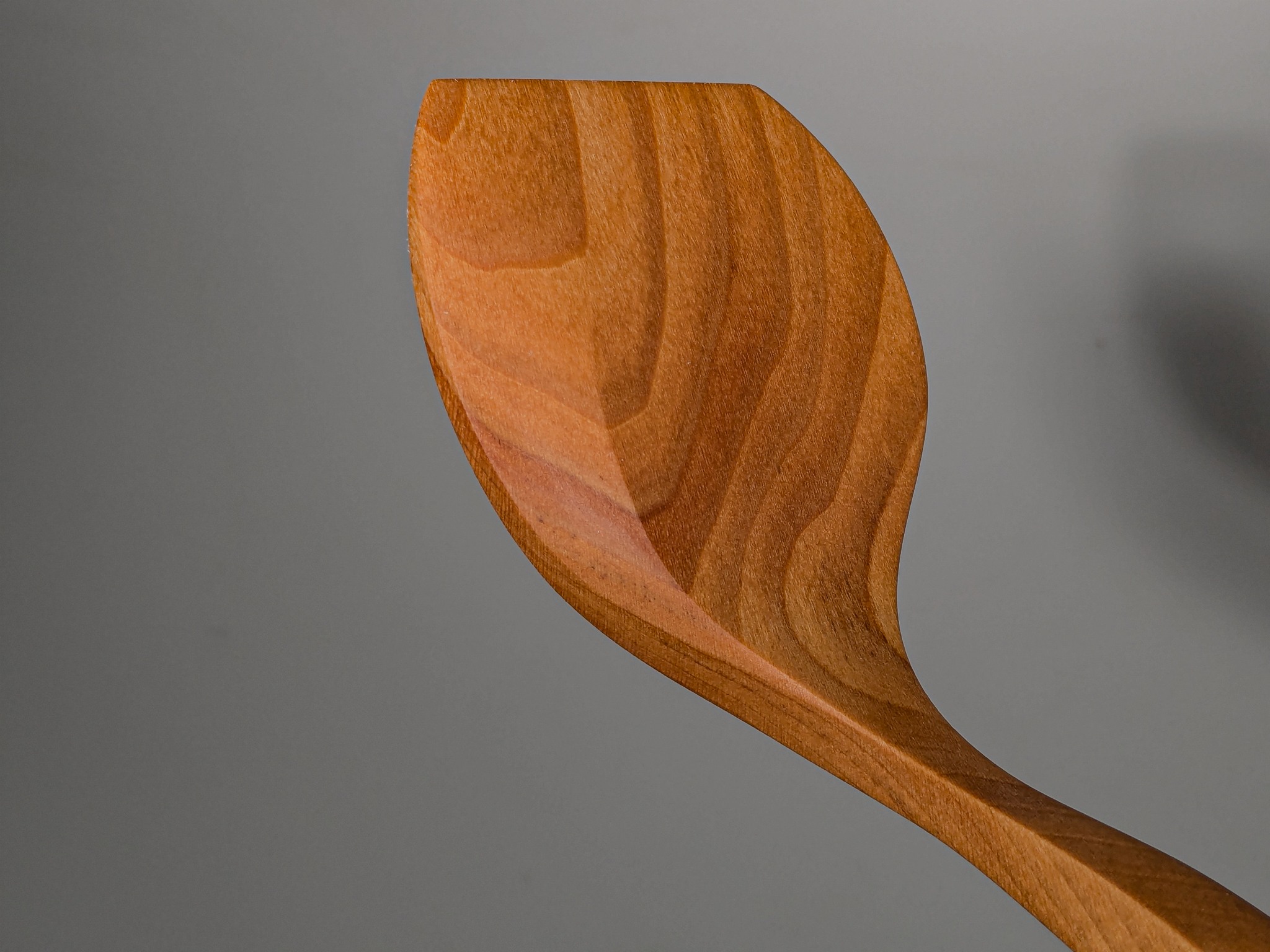
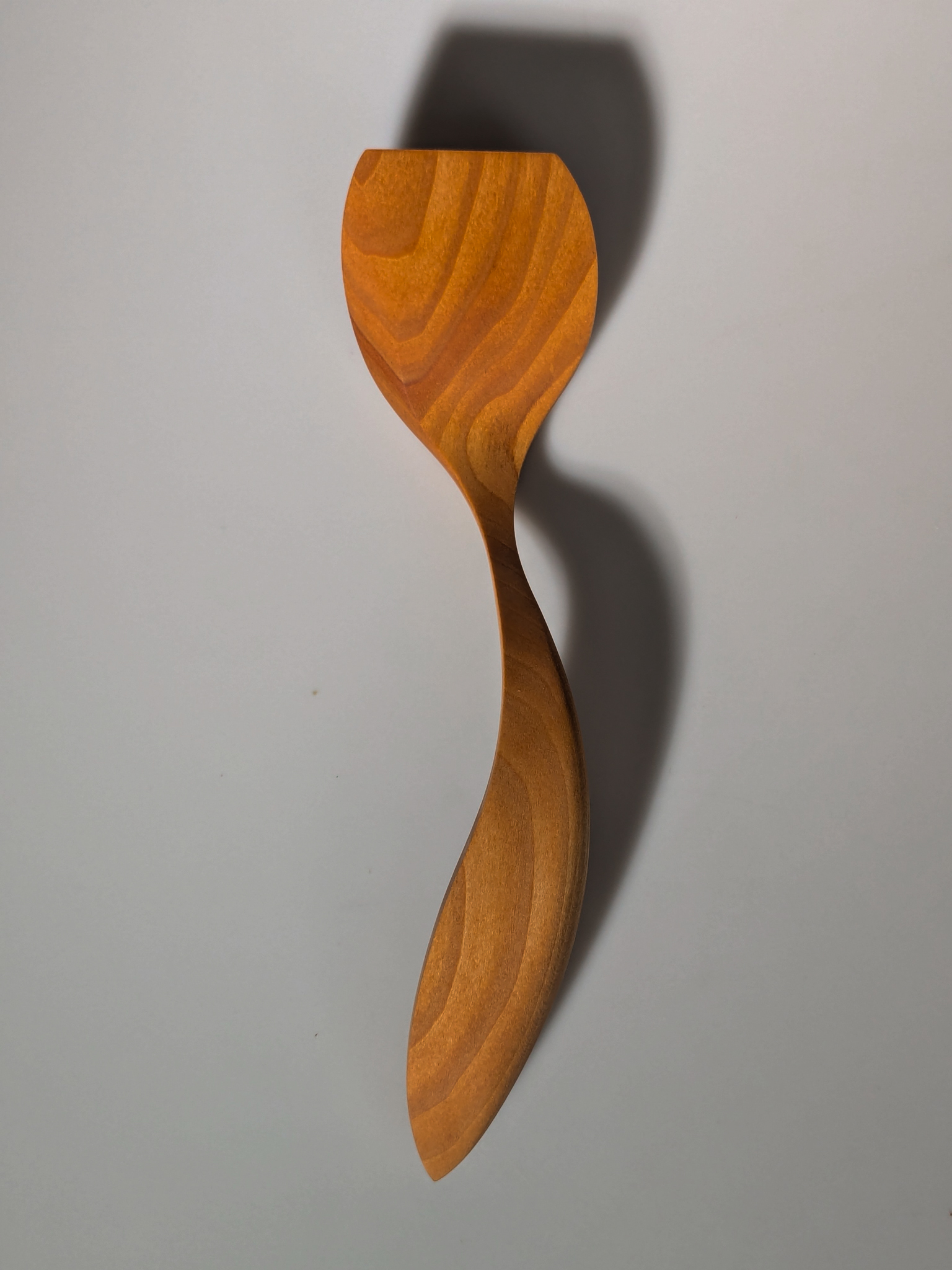
This spatula is designed for comfortable and satisfying cooking in a pan. Its form is derived from two lofted curves, top and side, with certain resulting edges filleted or chamfered. The goal of this project was to create a functional and beautiful object using minimal tools and preserving an intentional form throughout the hand fabrication process. Multiple foam models were made to demonstrate repeatability of fabrication and test variations.
Process
Form Intention
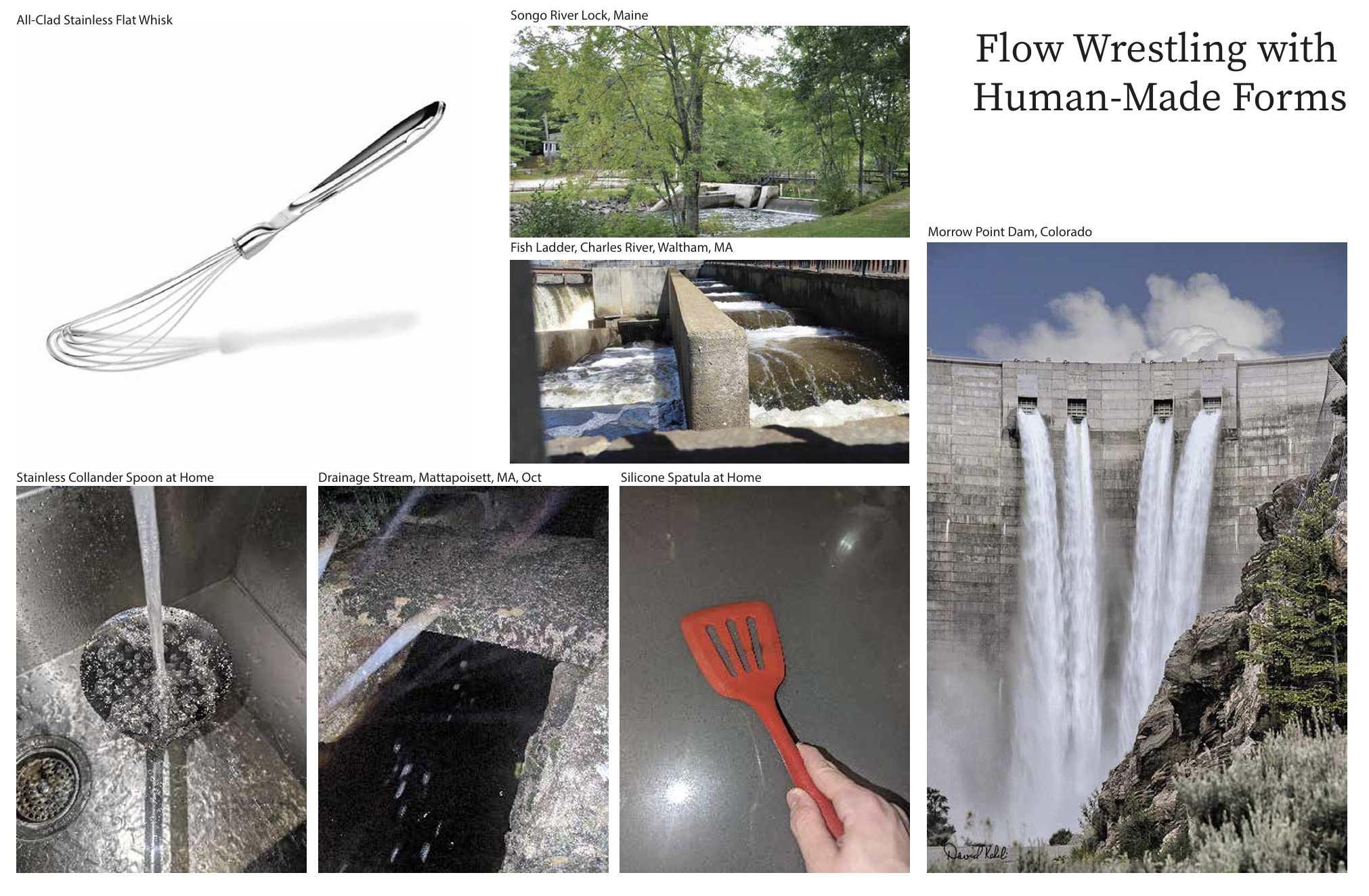
An image board was assembled to define a concept to define the properties of the flow form of the spatula. I focused on examples of natural flow interacting with static forms in the built environment, like dams and locks. I think that the study of these interactions assists in designing a flowing form which deals with such tensions; the spatula itself must resolve the tension between the handle and the active blade while also dealing with the tension between the hand, the cooking surface, and the food being cooked. The hand is a natural body while the cooking surface is hard, hot, and manufactured.
Sketching
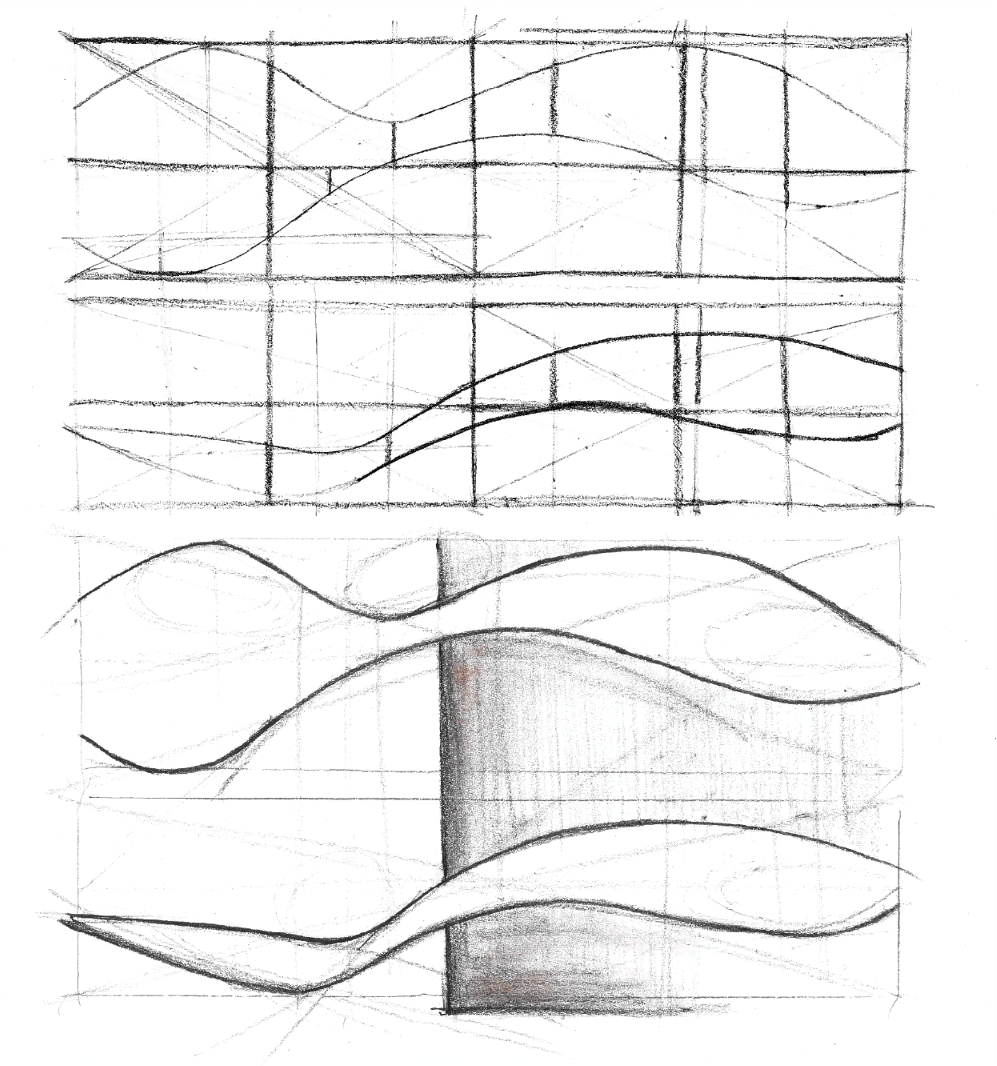
The spatula design is based on two orthographic profile sketches which loft together to create a four-faced form. The two views were drafted to have visual tension and flow both standing alone and in relation to each other. A light grid was used to guide points in the curve which define the handle, blade, and transitional area between them. The sketches were revised a few times, ranging from expressive to certain, before moving on to physical modelling.


Modelling
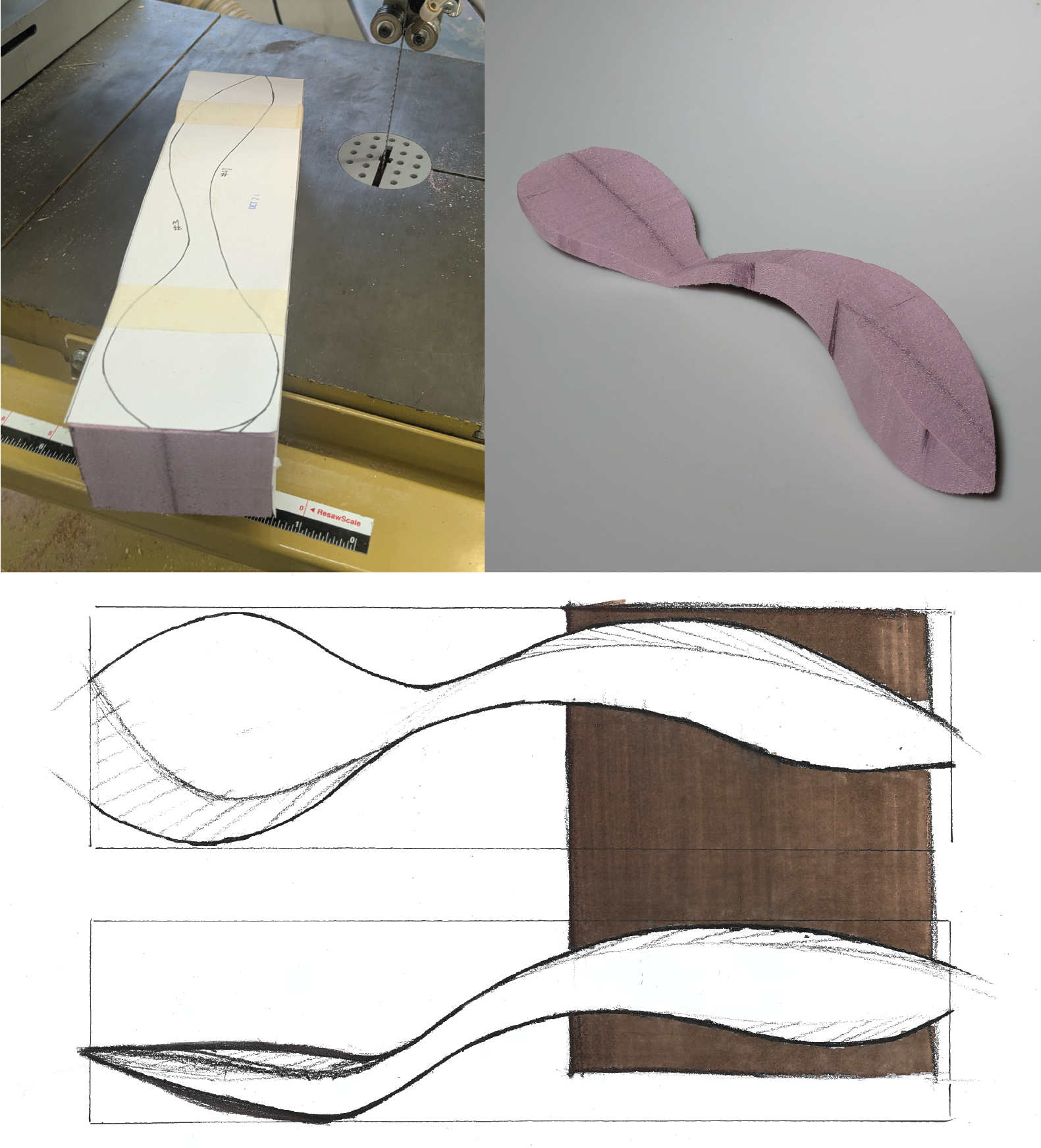
A pink foam model was made to test the interactions of the two orthographic views. The orthographic sketches were applied to a foam block and traced with a bandsaw to A final orthographic sketch was drawn with slight revisions to address issues found in the pink foam model. Additionally, the final sketch was annotated to define locations for secondary adjustments to the “blank” four-faced form resulting from the lofted orthographic sketches. I defined a variable chamfer emerging from the handle which expanded on the blade to slim it down for better scraping and added some fillets to the handle to improve the feel in the hand. For this assignment, fewer than half of all four hard edges were allowed to be modified, but I felt like I was able to make sufficient adjustments within this constraint.
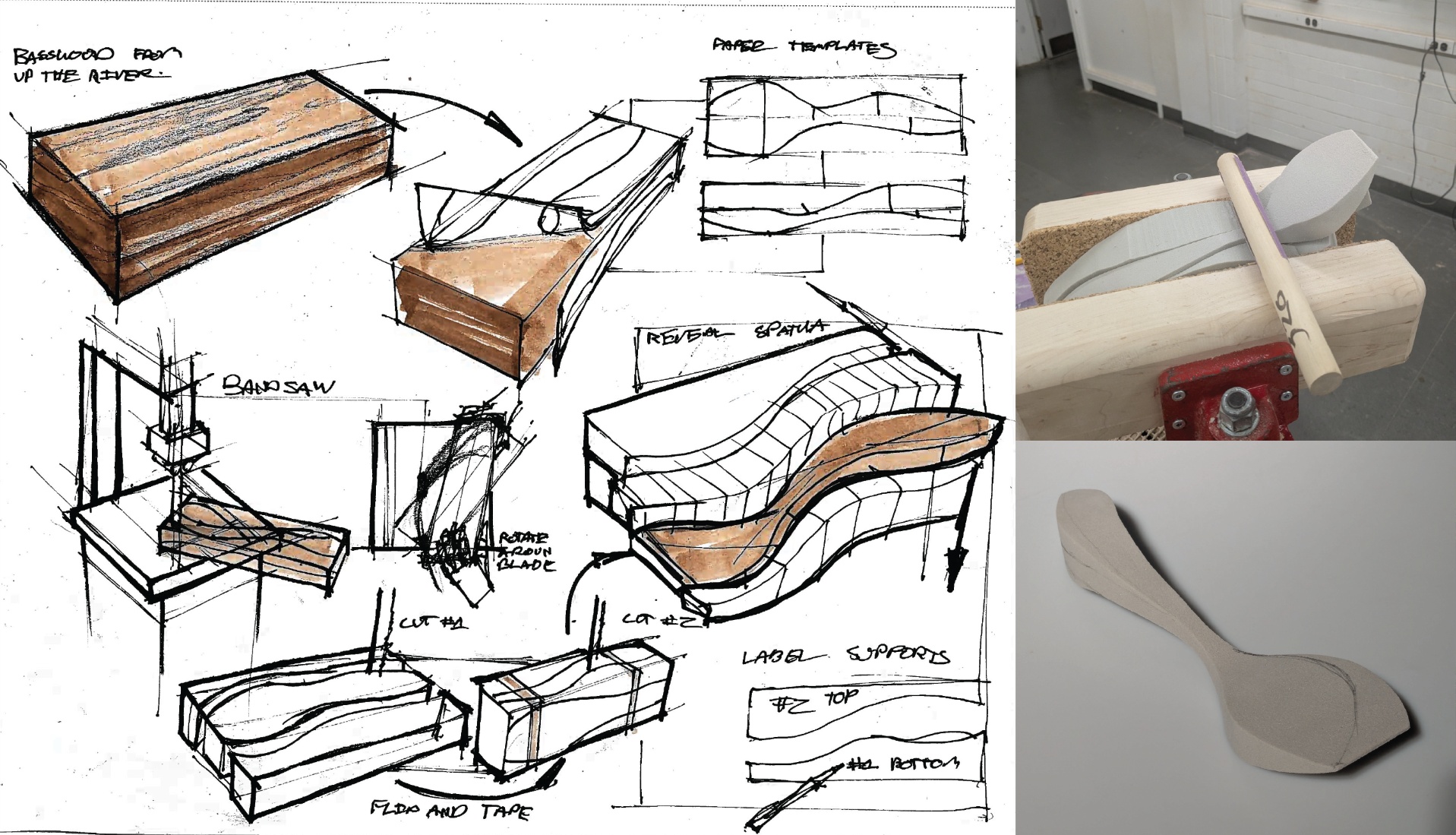
Before the final wood form was made, a high-density grey foam model was made to the exact specifications of the final spatula. Process drawings were made to plan out the fabrication process. This helped demonstrate repeatability and allowed for minute adjustments before the wood spatula was fabricated. The grey model was sanded to a high-fidelity including chamfers and fillets to test the final form in the hand.
Fabrication and Finishing
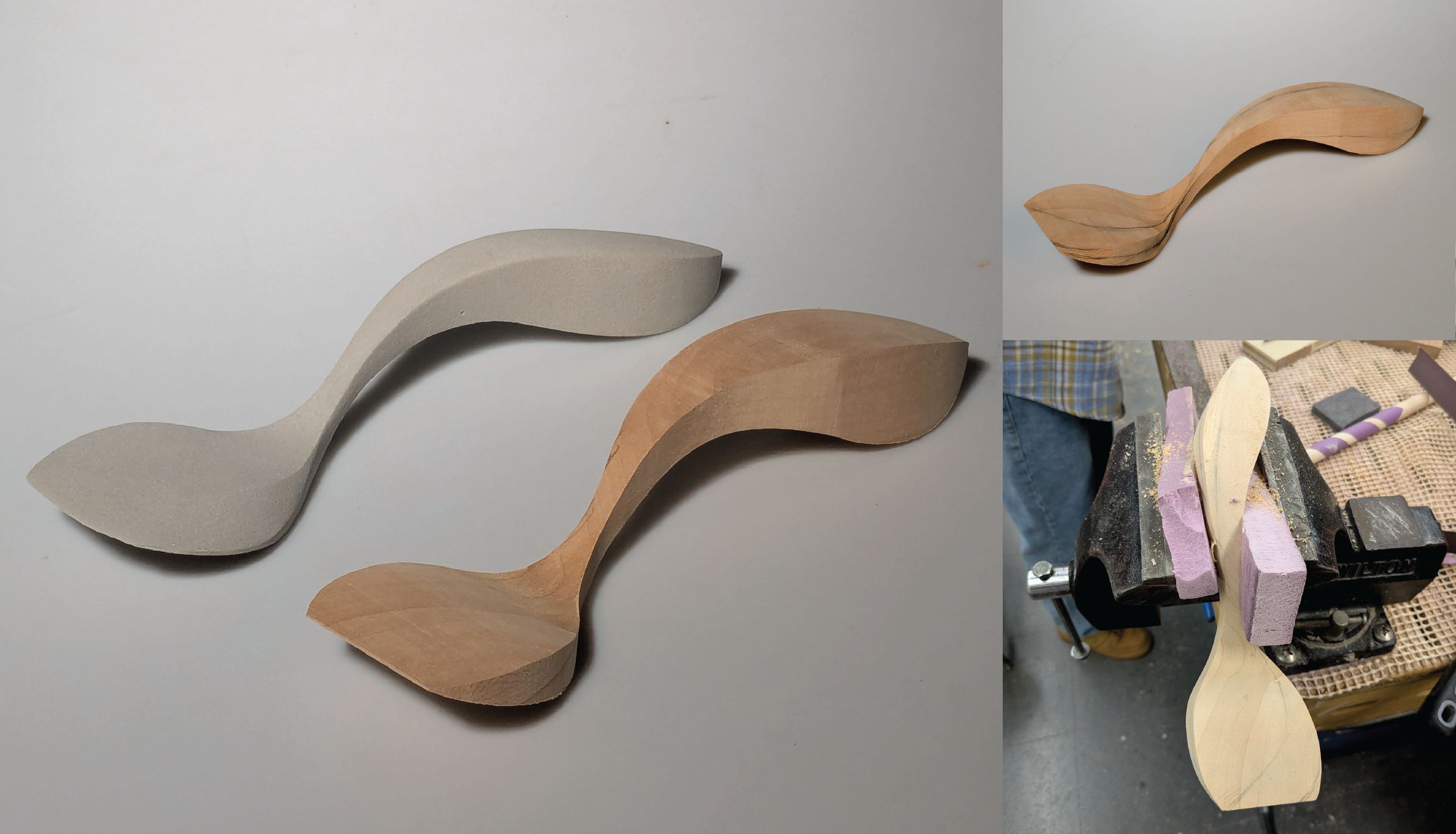
After I made the grey foam model, I changed the location of one of the handle fillets from where the outer palm rests to where the fingertips land to avoid the discomfort of the fingertips on a hard edge. The final spatula was crafted out of basswood following the procedure planned and practiced with the previous models, starting with four bandsaw cuts out of a block. The spatula was then carefully sanded to a high grit using blocks and cylinders with sandpaper applied to preserve the precision of the flat and curved faces. The spatula’s grain was raised and finished with mineral oil to seal it.
Gallery