Archivist's Tote

Spring 2026

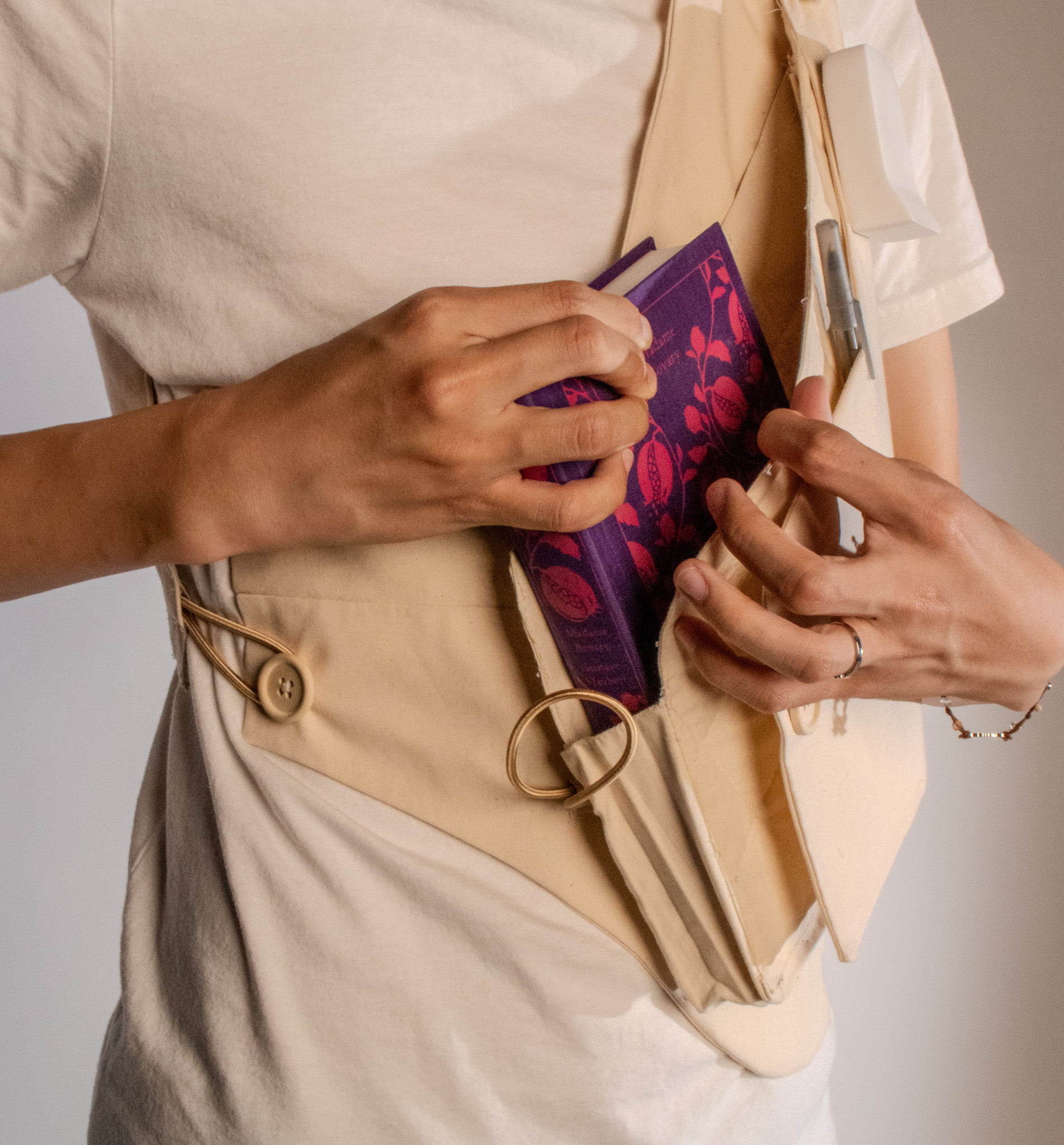
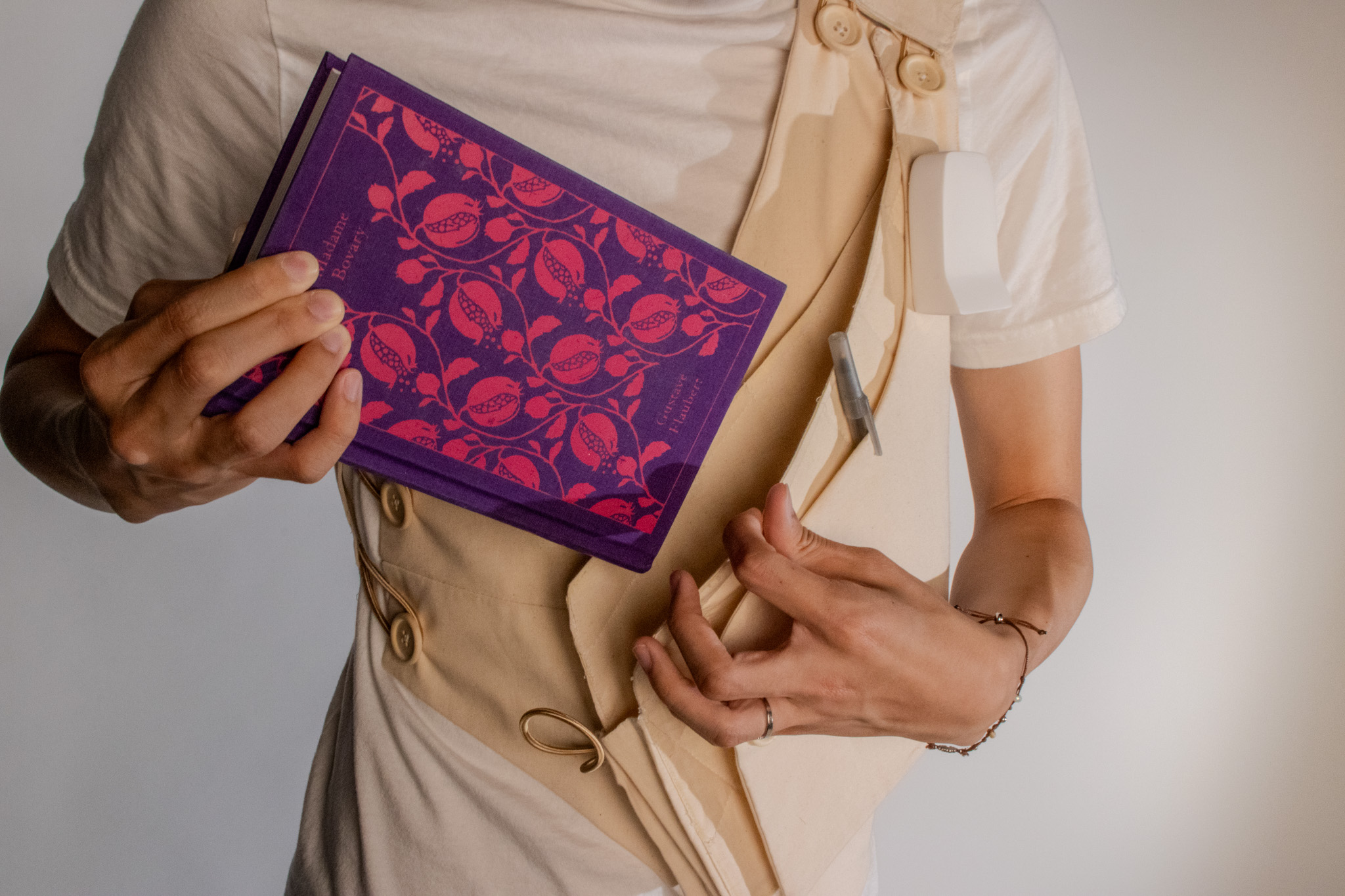
Designed as an occupational tool for archivists and custodians of rare books, this wearable supports the material retrieval workflow common in the library field. It cradles a book in a slim padded pouch worn like a vest. The wearer can easily stow volumes securely on their person while moving about space-limited archives, increasing productivity while preserving the safety of archival materials and the wearer's freedom of movement. The wearable also includes a hands-free digital scanner module which further increases the freedom of the wearer as they log retrievals and returns.
My role was primarily focused in the construction of the muslin prototype shown. I also lead the ideation for integrating the book scanner component into the overall design system.
Designed with Kika Atabaki and Russell Sang.
Process
The Environment
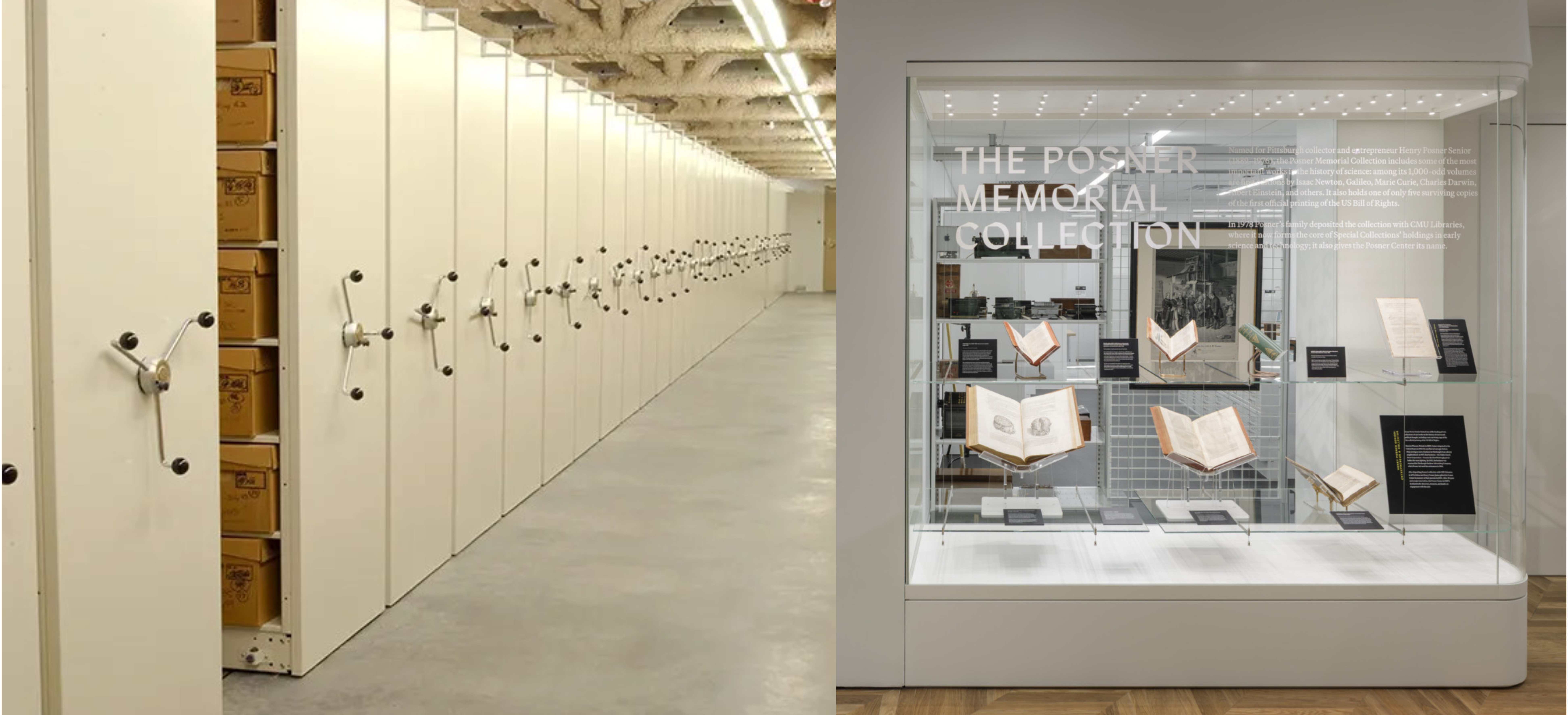
Our area of focus for this project was archives and special collections. We studied the Posner Center for Special Collections at Carnegie Mellon to find insights into how to improve the workflow for its staff. The collection holds a variety of rare and delicate books, artifacts and documents, including an original copy of the Bill of Rights and multiple Enigma Machines.
Identifying a Solution Space
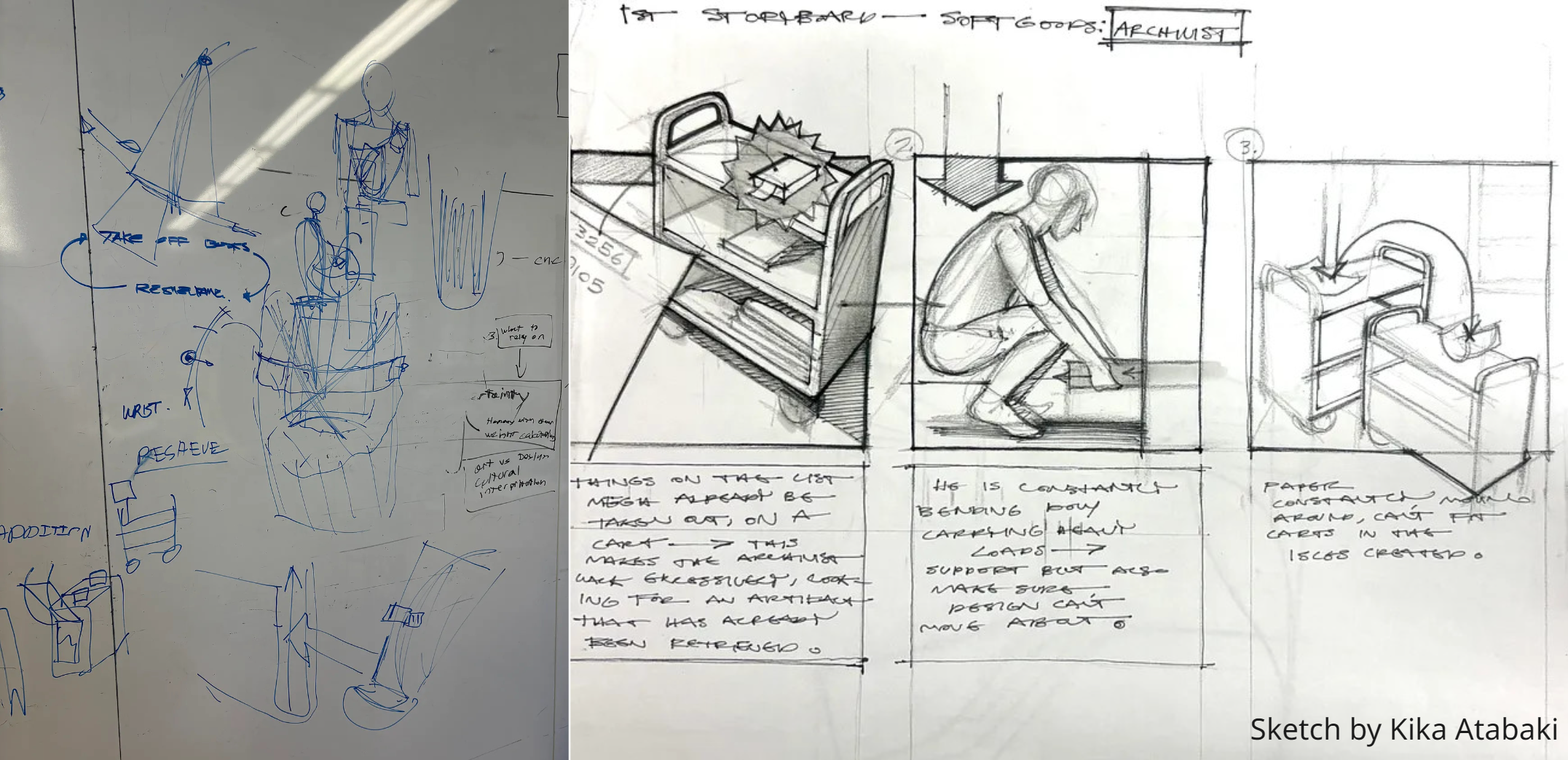
In our interviews and analyses of the workflow of archivists in the Special Collections Center, we noticed a bottleneck in the retrieval process for archival materials: curators must fetch one volume or object at a time due to their fragility. In a normal traditional stack, librarians may be able to use a cart to collect items, but the space in the environmentally-regulated "vault" is so confined that the archivist must go back and forth from the entry area for every retrieval. This space issue is further exacerbated by the implementation of moving shelves as a cart cannot be left between open shelves as the cart will block their movement when the archivist fetches from another shelf.


Prototyping
Each member of our group prototyped various directions and features after our joint ideation session. I focused on the placement and interaction of a hand-free book scanner to be integrated with the wearable. With such a feature, the wearable acts more like a system to ease the wearers workflow because they can inventory and track volumes in the same movement in which they stow it on their body. We also tested fold-out interactions and worn pocket form factors and decided to move forward with a less-bulky form where books are held near the chest and ribcage due to the relative rigidity of this area of the body and ease of access when stowing objects in the hand.
Simple Things Done Well
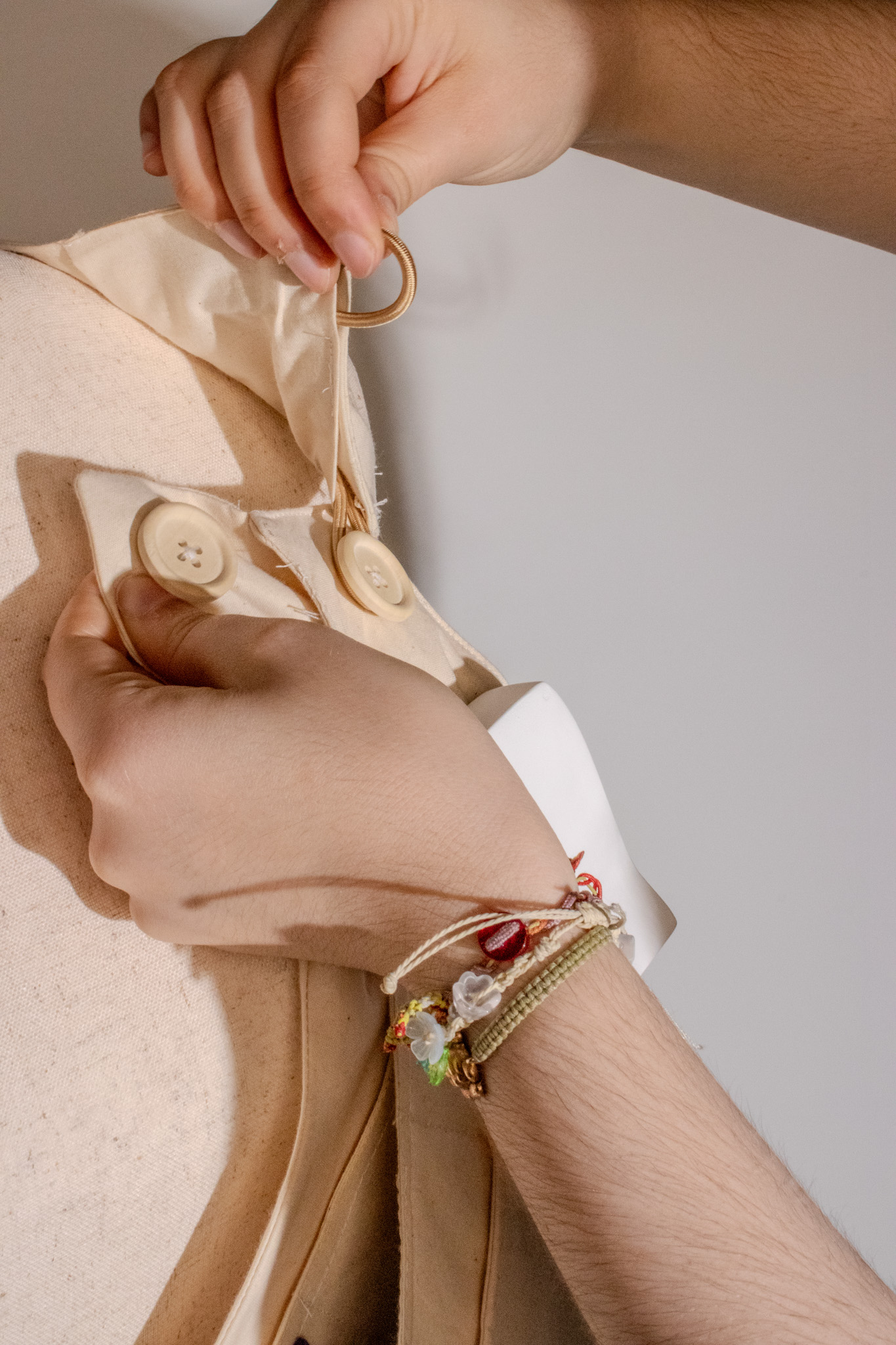
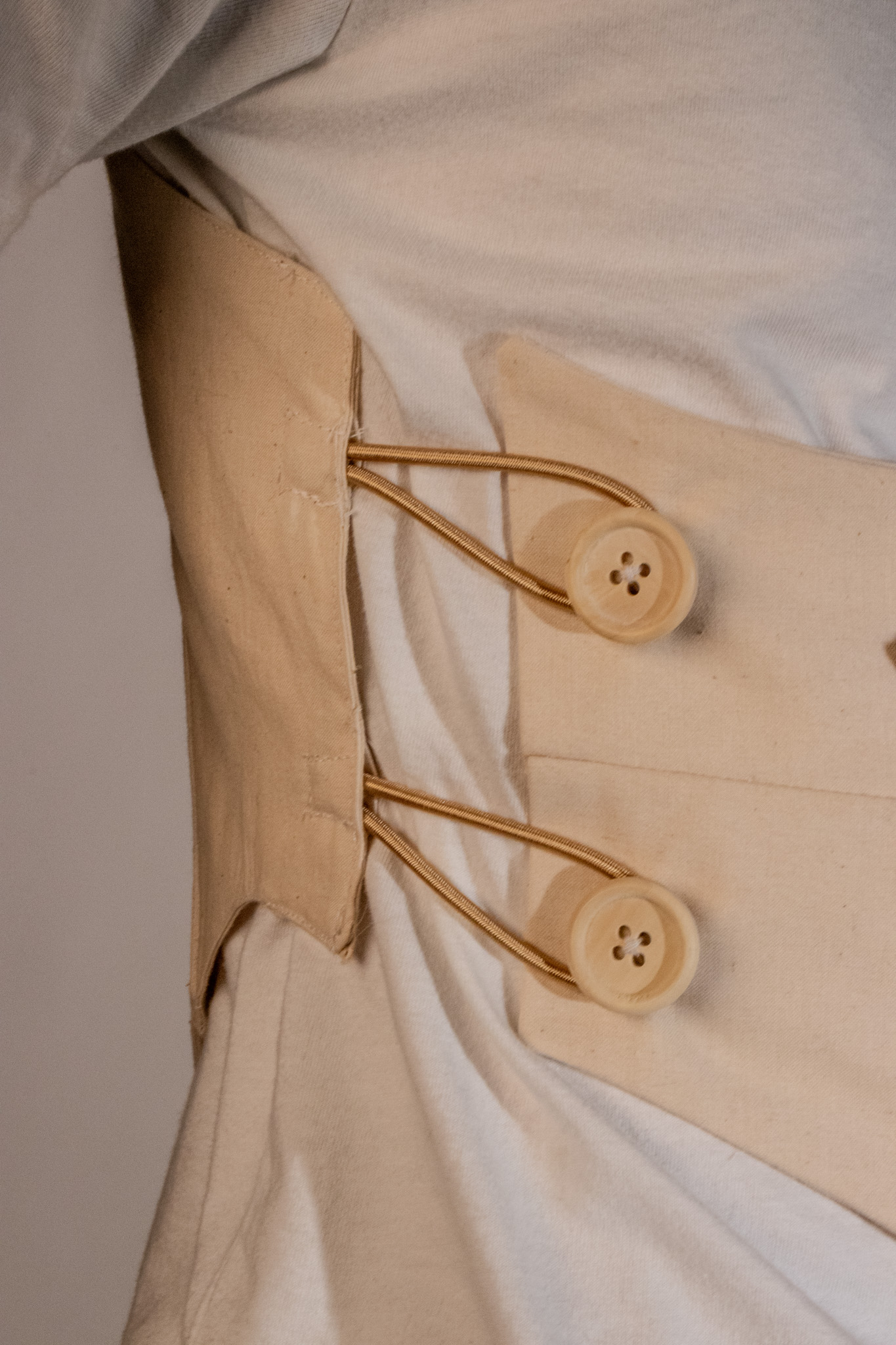
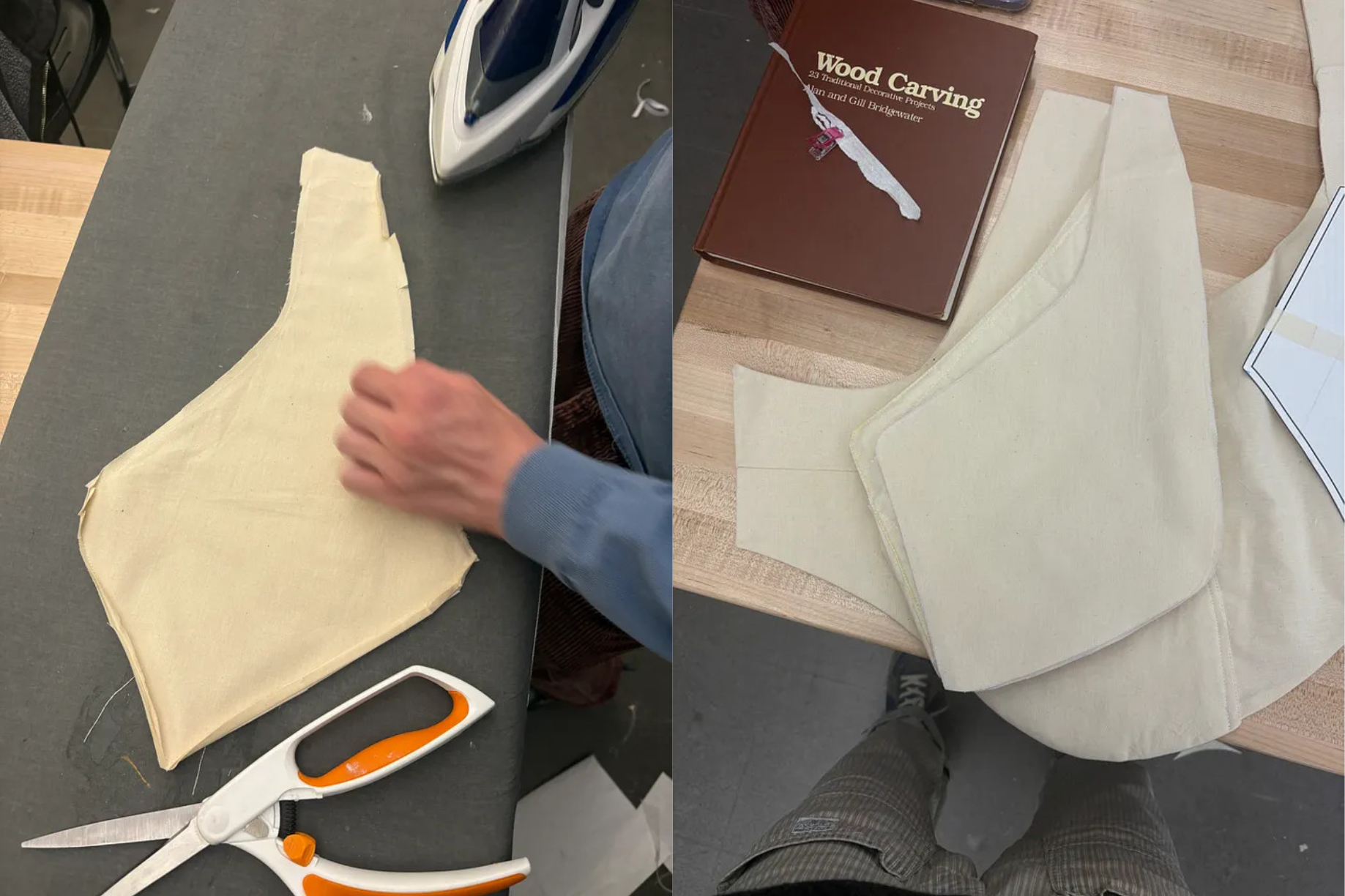
For this project, our goal was to fabricate a very high fidelity muslin prototype to effectively demonstrate our design while free from the distractions often brought by integrating many disparate materials too early in the design process. The cotton muslin represents a commercial textile effectively enough to showcase the design and material considerations for a wearable without stakeholders being distracted by extraneous factors like color and surface feel, as these considerations can be changed easily compared to the core form and function of the product. I was the primary fabricator for this muslin prototype. I worked through multiple prototype iterations, from flat pattern to final model.
Design Iteration Through Model Making
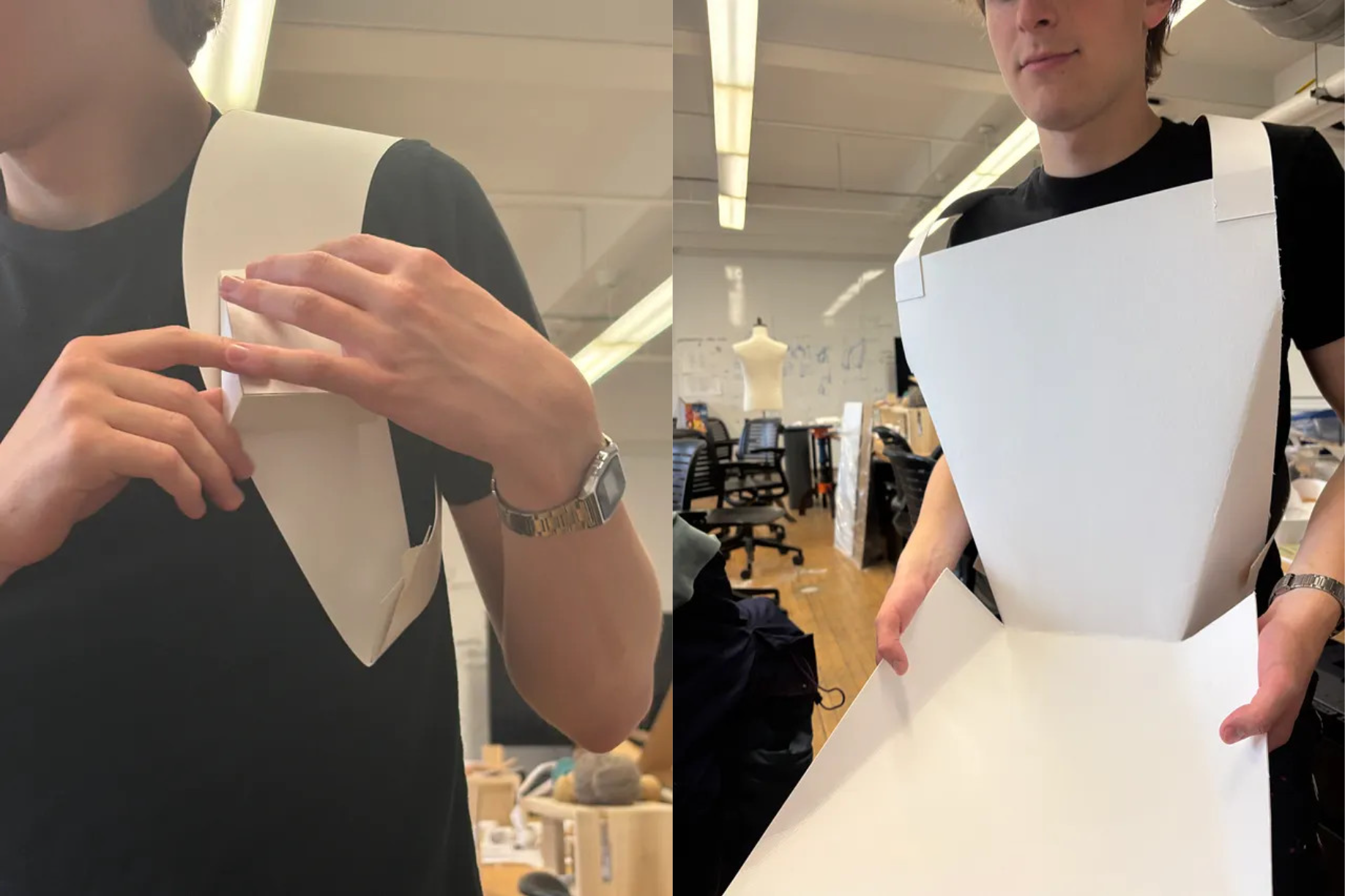
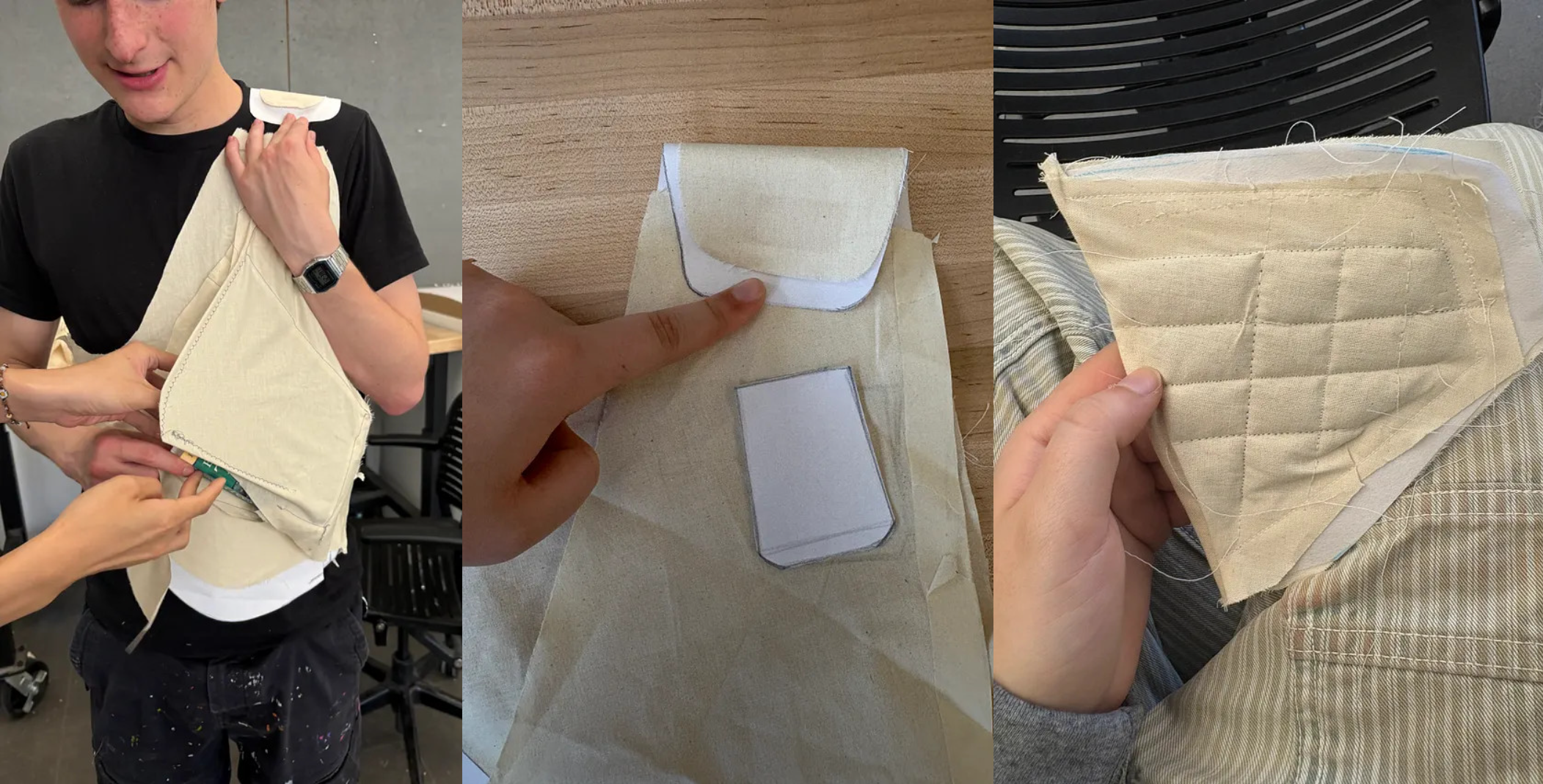
As the pattern developed, we validated the features and footprint of the wearable between iteration rounds, using paper to mockup changes on the body and integrate them into the next prototype. I worked through the form and interaction for the pocket which holds the books; I prototyped a side-slanted opening for access from the right hand and tested a layering technique where one side of the panel pins to the shoulder to keep a low profile while the other end accordions out to accommodate the book. I also tested a faux-quilting technique to pad the pocket where batting is stuffed between the layers and pinned down with a straight stitch in a quilt pattern. This padding technique performed very well and we were satisfied with it for the final model. Along with this padding, I determined each panel's interfacing load to ensure the right stiffness across the product. For example, the interfacing is the lightest in the front of the base smock for flexibility in movement, but builds to stiff near and inside the pocket to stabilize the book.
The Final Prototype
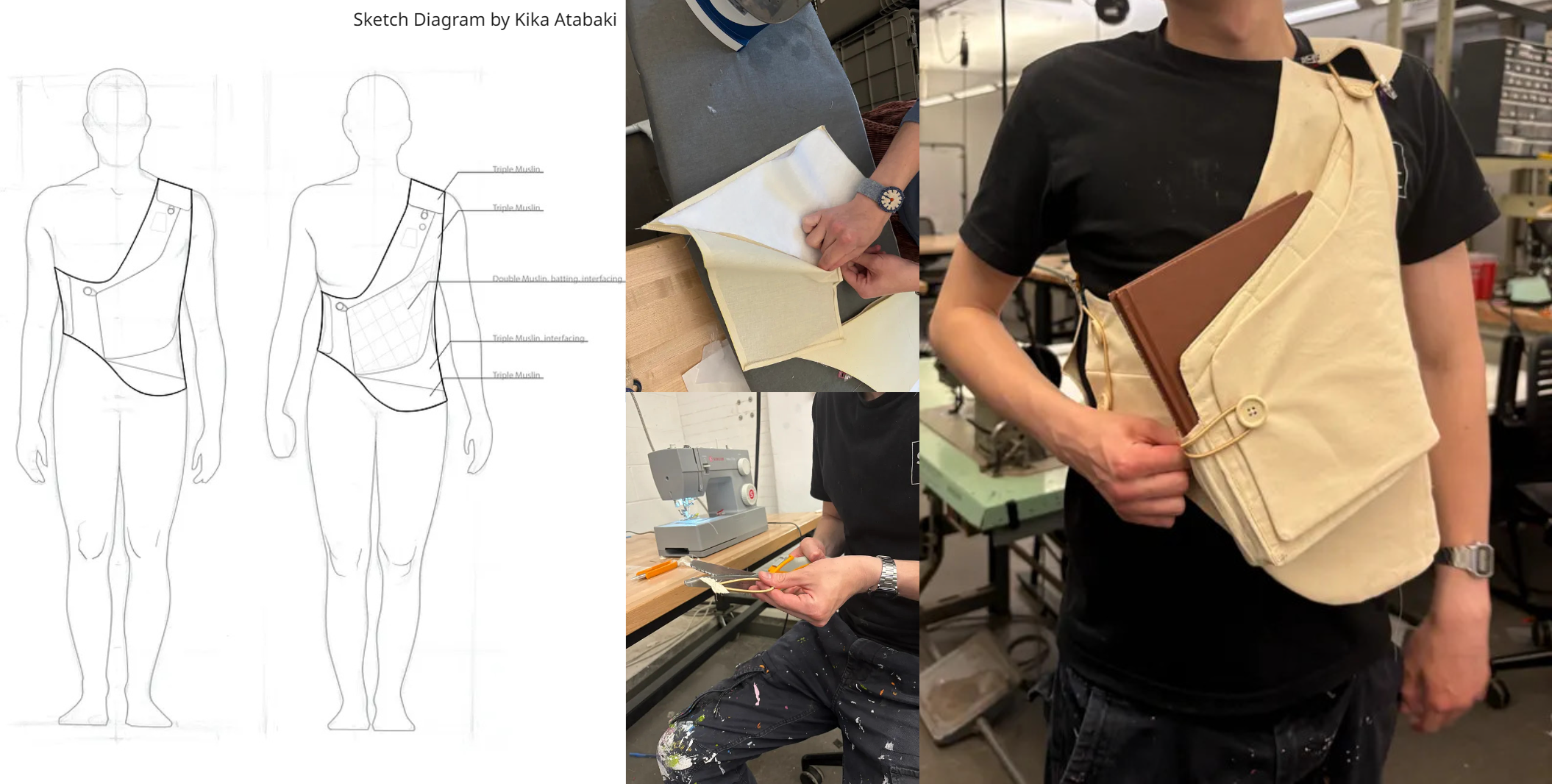
Once we had decided on the final form for the wearable, I started planning the final fabrication phase. My groupmate Kika re-drew a final set of patterns for the prototype and I then sewed constructed the fabric model, starting with each panel and building up each sub-assembly to the complete prototype. The order of operations was crucial because of how we integrated each component; for example, the pocket assembly had to be fully constructed before being affied to the smock component because of how we designed it to minimize bulk and seams. It was critical that the craft of the final model was excellent as to properly transform our prototyping textile to showcase our design intent.
Gallery